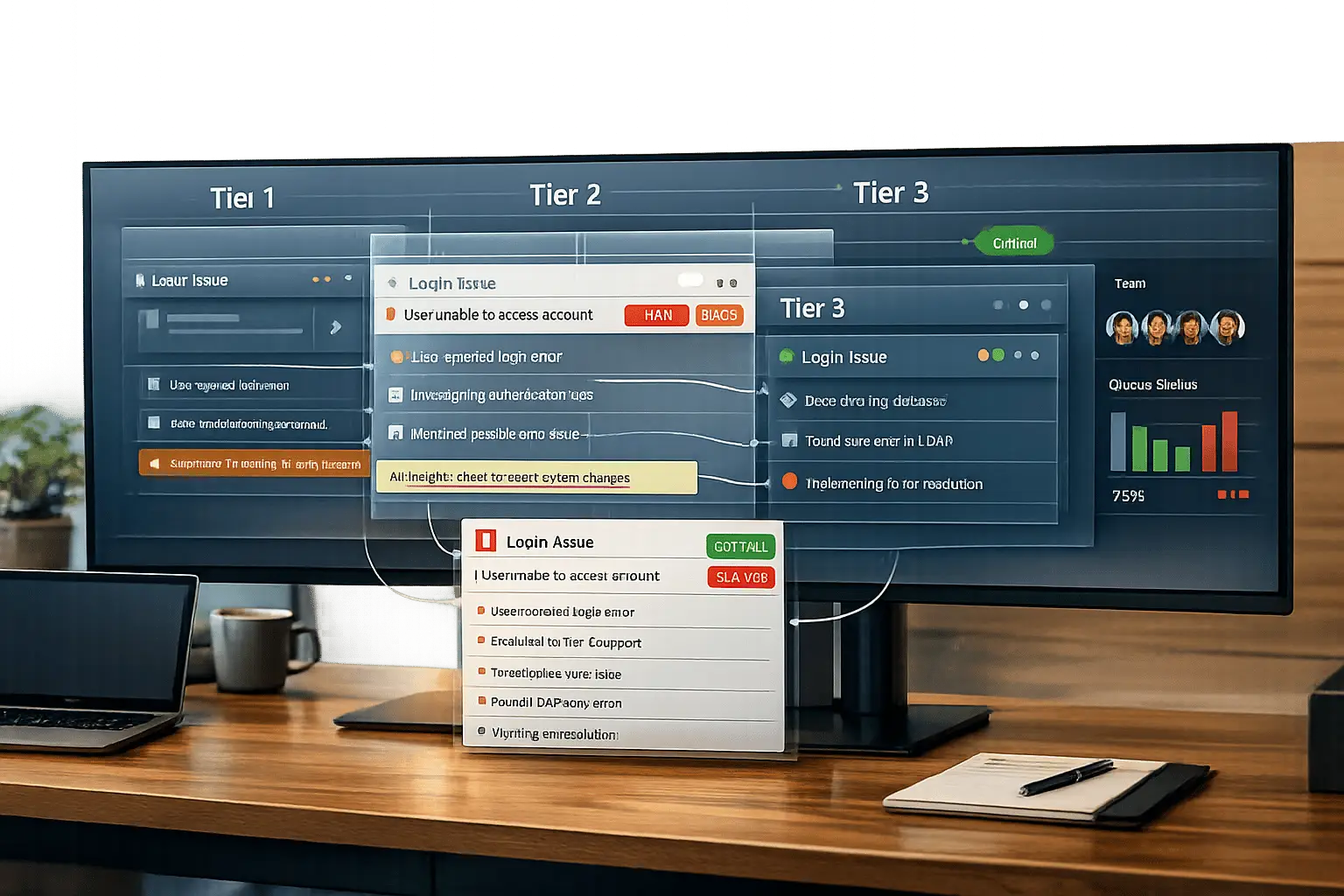
Scaling customer support is a challenge that every growing B2B organization faces, especially those offering high-value, complex services with extensive customer interactions. While it may appear straightforward at the outset, the journey to creating a robust, sustainable support system is anything but simple. In this article, we’ll explore a real-world case study of Closebot, a software company that scaled its customer support from managing just a handful of weekly tickets to handling thousands, while navigating the pitfalls of rapid growth.
This is not merely a recounting of their story but a guide packed with actionable insights for support leaders. Whether you’re managing a team of 5 or preparing for a leap to thousands, the lessons shared here will help you anticipate challenges, avoid common missteps, and build a support operation that maintains quality and efficiency.
The Journey: From Founder-Led Support to a Scalable System
Stage 1: The Early Days – Staying Close to Customers
When Closebot launched in late 2022, its founder handled everything singlehandedly – product development, sales, operations, and support. At this stage, Closebot was managing just 1 to 10 support requests weekly, primarily via email. Without a dedicated system or team, the simplicity of this approach allowed the founder to remain deeply connected to customers, enabling quick iterations on the product based on direct feedback.
Key Takeaway from Stage 1:
- In the earliest stages, don’t overcomplicate your systems. Prioritize product development and sales while handling support personally. This hands-on approach keeps you in tune with customer needs.
Stage 2: Finding Product-Market Fit and Adding Early Team Members
As Closebot began to scale – fielding 10 to 40 weekly support messages – the founder expanded the team to include three additional staff members. Initially, the team used a basic chat-based system, akin to a shared inbox. While manageable at first, this informal approach began to show cracks, with occasional missed messages and longer response times.
To address these growing pains, Closebot adopted Intercom for a more collaborative and efficient chat-based workflow. The platform’s built-in AI deflected roughly 50% of inbound questions by leveraging its help documentation. However, as the volume of inquiries increased, the lack of a structured ticketing system became a problem, especially for complex issues requiring development work.
What Could Have Been Done Differently:
- Implement a ticketing system earlier to manage long-running issues effectively. Customers perceive chat platforms as "real-time", which can create undue urgency and unrealistic expectations, unlike a ticketing system that signals a more measured response time.
Stage 3: Rapid Growth and Scaling Chaos
By late 2023, support volume had surged to 40-100 weekly tickets, handled by a team of six. Despite the larger team, Closebot’s chat-based system became unmanageable. Common issues included:
- Messages slipping through the cracks.
- Inconsistent communication between support agents.
- Lack of dedicated leadership within the support function.
The chaos prompted a critical realization: support teams need structure and leadership. Closebot appointed a senior team member as the support lead, freeing the founder to focus on product and sales.
Lesson Learned:
- Assign a dedicated leader to your support team as soon as it grows beyond two or three members. A clear hierarchy and accountability are critical to scaling operations effectively.
Stage 4: Major Transition and Breaking Points
The biggest challenge came in mid-2025 when Closebot introduced its V2 product while simultaneously acquiring Zappy Chat. The user base grew exponentially, and support volume spiked to nearly 300 messages daily at its peak. The company had doubled its support team to 13 members in anticipation of the growth, but this wasn’t enough. Key challenges included:
- Undertrained Level 1 staff: The team’s training on V2 was rushed and incomplete, leaving them reliant on Level 2 support.
- Lack of a ticketing system: Without proper escalation workflows, many customer inquiries languished unresolved for days or weeks.
- Unrealistic expectations from customers: The absence of proactive communication exacerbated customer frustrations during this turbulent period.
The result? A bottlenecked system where Level 2 agents bore the brunt of all escalations, effectively reducing the team of 13 to just three functional members.
Building Back Better: The Recovery Plan
Closebot adopted the following strategies to stabilize and improve its support processes:
1. Establishing a Strong Level 2 Team and Comprehensive Training
Training for the Level 2 team was revamped to include direct involvement from the product lead. This ensured that support staff were always up-to-date on the latest product fixes and features.
2. Adopting a Ticketing System
Implementing a ticketing system dramatically improved operations. Escalation workflows between Level 1 and Level 2 agents became more structured, and long-running issues could be marked clearly as "in progress."
3. Prioritizing Stability Over New Features
Closebot paused all new feature development for six weeks to focus solely on product reliability, bug fixes, and system stability. This prioritization sent a clear message to both customers and the support team that building trust was paramount.
4. Adding Office Hours for Real-Time Support
To manage immediate concerns during the transition, Closebot introduced 10 hours of weekly office hour sessions where customers could get direct, live assistance.
5. Investing in Documentation and AI Support
The team created and continuously updated 70+ help documents, ensuring the AI-powered support system could deflect the majority of simple inquiries. Success rates climbed to over 60% deflection, alleviating pressure on human agents.
Insights for Support Leaders:
- Proactively train support teams on upcoming changes. Schedule training sessions directly with product experts to ensure accuracy.
- Address customer frustrations with transparency – offer alternative avenues like office hours or status updates.
- Never underestimate the value of detailed, up-to-date documentation, especially for AI-enabled support tools.
sbb-itb-e60d259
Key Takeaways
- Start Simple: In the early days, focus on staying close to your customers and gathering feedback rather than overinvesting in tools or processes.
- Adopt Scalable Systems Early: Transition to a ticketing system before your chat volumes become overwhelming to avoid chaos.
- Assign Leadership Early: Appoint a dedicated support leader once your team grows beyond 2-3 members.
- Train for Change: Ensure your team is ready for large product rollouts with comprehensive training and clear escalation paths.
- Stabilize Before Expanding: Focus on reliability and customer trust before adding new features or scaling further.
- Leverage AI and Documentation: Invest in help documentation and AI tools to deflect common questions effectively, freeing human agents for high-value interactions.
- Be Proactive in Communication: Use office hours, notifications, or proactive updates to manage customer expectations during high-demand periods.
Final Thoughts
Scaling customer support is not just about hiring more agents – it’s about building sustainable processes, empowering your team, and staying laser-focused on your customers’ needs. Closebot’s journey from chaos to stability highlights the importance of planning for growth, adopting scalable tools, and creating a culture of continuous improvement.
For support leaders looking to modernize and scale their own operations, the lessons from Closebot offer a clear path forward: start with simplicity, add structure as you grow, and never lose sight of the customer experience.
Source: "How I Scaled Customer Support From 5 Users to Thousands (What I’d Do Differently)" – CloseBot, YouTube, Jan 1, 1970 – https://www.youtube.com/watch?v=UUHQixy7muI