Polite customers can often hide critical issues, leaving Customer Success Managers (CSMs) unaware of potential problems. This silence can lead to unexpected churn, reduced advocacy, and missed opportunities to address dissatisfaction early. Here’s how to tackle this challenge:
- Recognize subtle warning signs:
- Reduced engagement (e.g., slower responses, skipped meetings).
- Vague feedback or unrealistic requests.
- Declining enthusiasm or product usage.
- Understand why customers hold back:
- Fear of jeopardizing relationships or future negotiations.
- Feedback is often filtered through decision-makers, not frontline users.
- Leverage AI tools:
- AI sentiment analysis: Detect shifts in tone or language in interactions.
- Sentiment trends: Track changes over time for early warnings.
- AI summaries: Consolidate customer history to identify unresolved issues.
- Escalation prediction: Spot accounts at risk before complaints arise.
- Build effective workflows:
- Use dynamic SLAs to prioritize at-risk accounts.
- Monitor predictive metrics like CSAT, CES, and usage patterns.
- Automate alerts for declining sentiment or engagement.
Politeness doesn’t always mean satisfaction. By combining behavioral insights, AI tools, and structured workflows, CSMs can identify and address hidden concerns before they escalate.
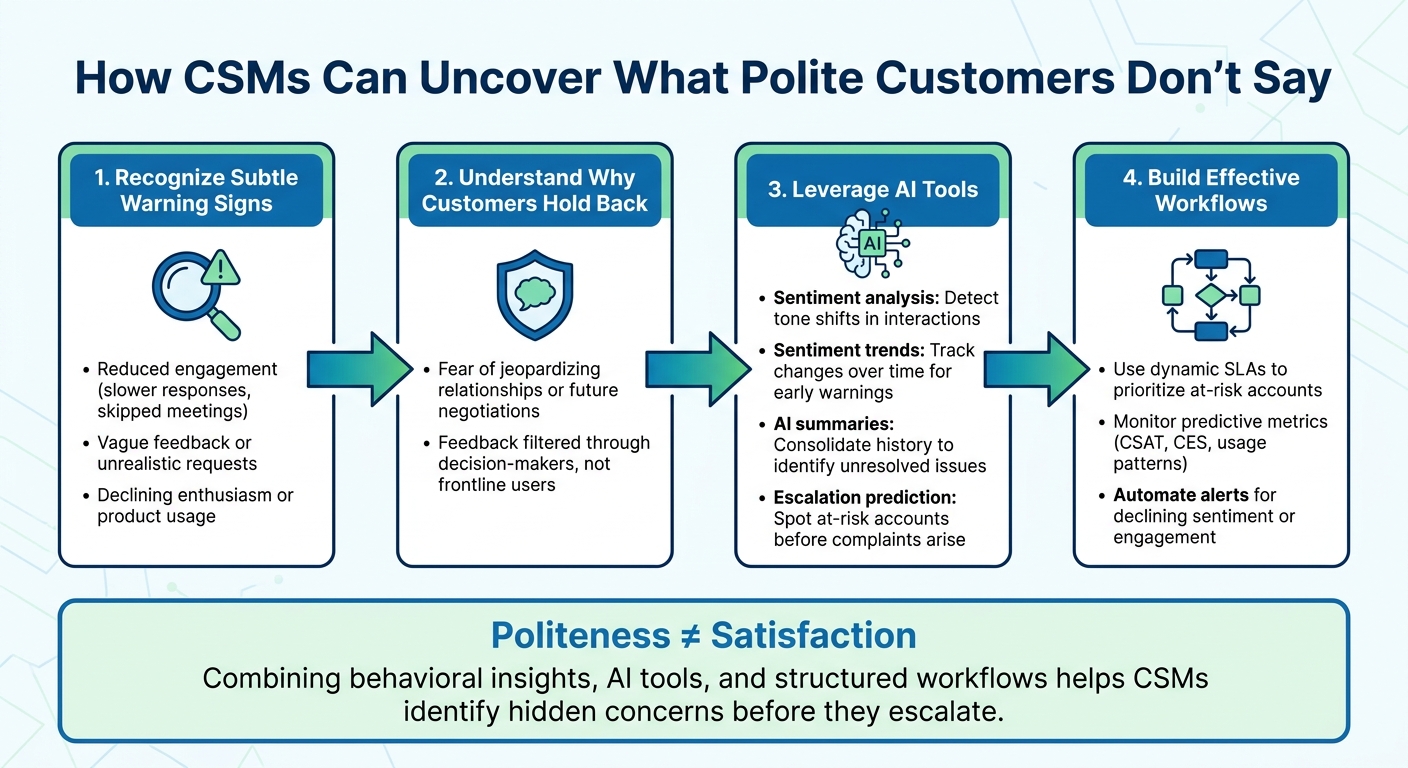
4-Step Framework for Detecting Hidden Customer Dissatisfaction
Reputation’s Strategy: Eliminating "Surprise Churn" with Honest Feedback
sbb-itb-e60d259
How to Spot Signs of Hidden Customer Dissatisfaction
Dissatisfaction doesn’t always come with flashing warning signs. More often, it hides behind subtle patterns that customer success managers need to actively identify. The key is to pick up on both what customers say and what they leave unsaid.
Customer Behavior Patterns That Signal Problems
Changes in customer behavior – like delayed responses, skipped meetings, or vague answers during check-ins – can be early indicators of trouble. These shifts don’t necessarily mean your product is failing; sometimes, they highlight underlying issues that need attention.
Unrealistic requests are another clue. When customers ask for features beyond their subscription level or push for something technically impossible, it might signal a deeper misunderstanding of your product’s value. Shivi Agarwal, Customer Success Manager at Kudos, explains:
"When it comes to active listening, you are not only listening what customers are saying, you’re also listening what they are not saying" [1].
Reduced engagement is another red flag. Short, less detailed communications or a noticeable drop in enthusiasm during interactions could point to hidden frustrations. These might stem from challenges like setup difficulties or ongoing maintenance demands that quietly erode satisfaction [2].
By recognizing these behavior patterns, you can start piecing together a bigger picture of customer sentiment.
Using Context to Understand Customer Sentiment
Isolated incidents don’t tell the whole story. A single delayed response might not mean much on its own, but when paired with shorter emails, less enthusiasm during calls, and declining product usage, a clearer narrative emerges. Understanding the overall trajectory of the relationship is far more insightful than focusing on isolated events.
One practical way to gauge sentiment is by using a 1-10 scale at the end of calls. If a customer gives a mid-range score – like a 6 – ask them directly what it would take to bump that up to a 7 or 8. This simple follow-up can uncover concerns that might otherwise remain hidden [1].
Transparency is also crucial. As Cinthia Silva, Customer Success Strategist at Nasdaq, puts it:
"Clear is kind. So don’t dance around it, just get to it… tell the truth. And just when you level with the customer… that’s how you establish trust with them" [1].
When you notice patterns like slower responses or a shift in tone, don’t hesitate to address them head-on. Direct conversations build trust faster than trying to sidestep the issue.
Finally, pay attention to what customers share outside formal interactions. Social media posts, industry forum comments, and discussions in user communities often reveal frustrations that don’t make it to official support channels [2]. AI tools can help monitor and analyze these subtle signals, turning scattered observations into actionable insights.
These contextual observations are the first step in leveraging AI to uncover dissatisfaction that customers might not openly share.
Using AI to Detect Unspoken Customer Concerns
Once you’ve identified behavioral patterns and contextual clues, AI can help uncover the concerns customers might not openly express. Modern AI tools can analyze tone, language, and intent across a variety of interactions – emails, chats, and support tickets – to reveal issues that customers might carefully hide behind polite or professional language.
AI Sentiment Analysis for Customer Conversations
Sentiment analysis does more than just interpret the words in a message – it evaluates the emotional undertone, even in carefully worded communications. For instance, Supportbench uses sentiment tracking across helpdesk interactions to provide a Sentiment Score, which quantifies a customer’s emotional state in real time. This score helps Customer Success Managers (CSMs) differentiate between genuinely satisfied customers and those masking frustration behind polite responses.
The real advantage lies in tracking Sentiment Trends over time. A customer may never voice a complaint directly, but a gradual shift from "Positive" to "Neutral" sentiment over weeks can serve as an early warning. As Supportbench explains:
"By analyzing the tone and language used in every interaction, Supportbench can identify when a customer is becoming frustrated, even if they haven’t explicitly said so" [3].
This proactive approach means CSMs can address underlying issues before they escalate into negative feedback or cancellations.
For prioritization, focus on tickets with declining sentiment scores rather than just those marked as urgent. For example, a politely worded email with a negative sentiment trend might require immediate attention, even if it doesn’t seem critical on the surface. Automated alerts for sudden drops in sentiment can prompt timely check-ins, helping prevent "silent" escalations that might otherwise go unnoticed.
Beyond sentiment tracking, AI-generated summaries offer concise overviews of customer histories, enabling teams to predict and address potential escalations.
AI Case Summaries and Escalation Prediction
When customer frustrations are scattered across multiple interactions, manually reviewing long histories can be overwhelming. AI-generated case summaries simplify this process by distilling extensive customer records into clear, actionable overviews. These summaries highlight recurring issues or unresolved concerns that might be overlooked in individual tickets, giving CSMs the tools they need to address problems early and reduce churn risk.
Escalation prediction tools take this a step further by analyzing customer behavior patterns to identify accounts at risk before a complaint is ever made. Predictive AI leverages sentiment data to spot accounts that are disengaging quietly, allowing CSMs to step in proactively. These tools can also be invaluable during Quarterly Business Reviews (QBRs), helping teams identify recurring "minor" frustrations that customers may have stopped reporting but are still impacting satisfaction.
Rather than waiting for negative CSAT scores, prioritize outreach using AI escalation scores. Relying solely on predictive CSAT and survey feedback risks missing the "silent churners" – polite customers who leave without leaving a bad review. Reviewing a "Sentiment Trend" graph before a QBR can reveal whether a customer’s perception of your brand is improving or declining over time.
Supportbench‘s AI Customer Activity Summaries
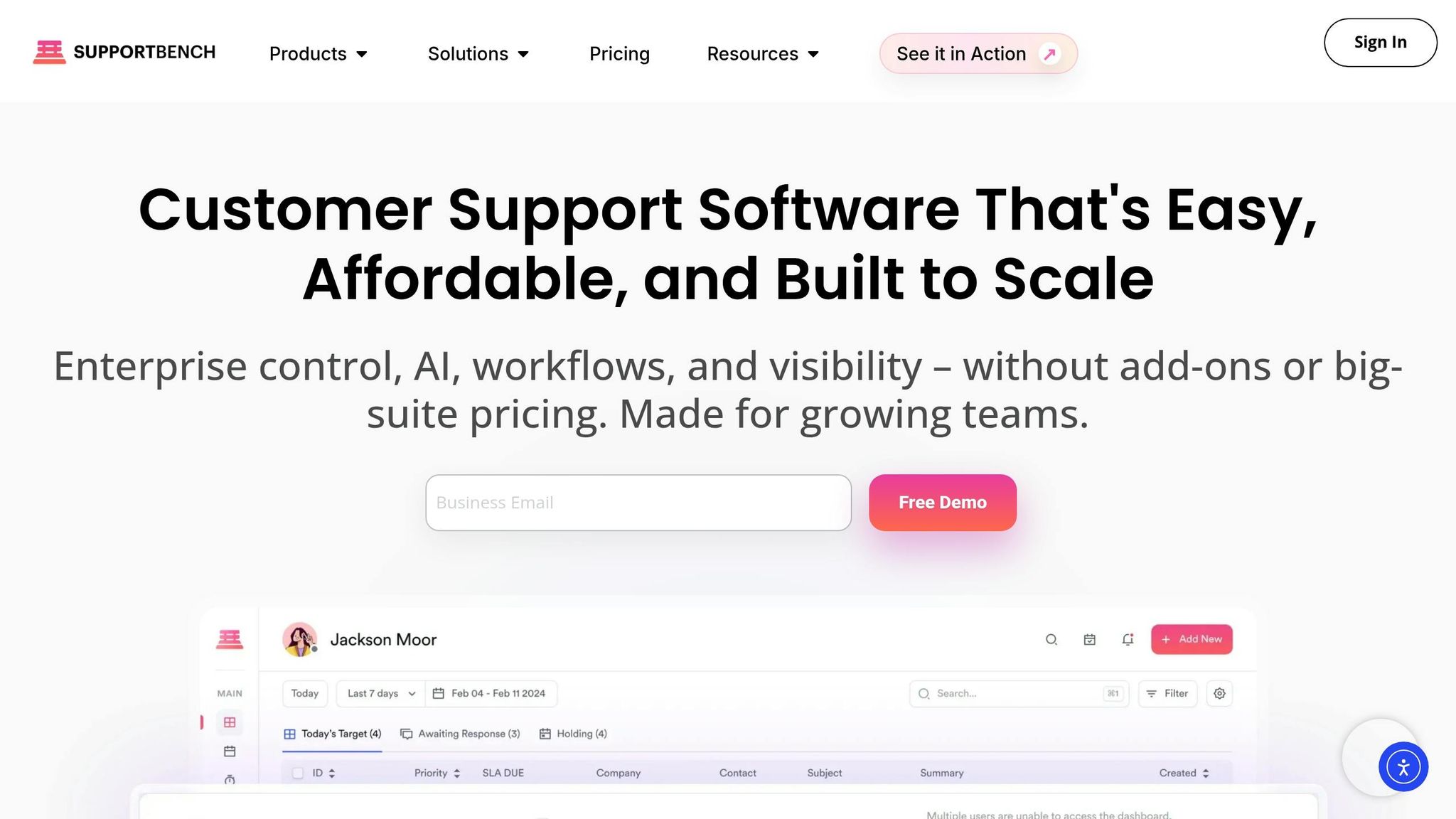
To complement sentiment analysis and escalation prediction, AI activity summaries provide a comprehensive view of customer interactions. Supportbench’s AI tools consolidate customer activity into concise insights, helping CSMs identify unresolved issues that could lead to future problems. These summaries ensure that CSMs are aware of the "emotional history" of an account before every call or check-in.
By reviewing these summaries ahead of customer success meetings, teams can uncover "hidden" frustrations that customers may be hesitant to voice directly. These insights bridge the gap between support and success, ensuring that technical issues mentioned in support tickets – though marked "resolved" – don’t linger as unresolved frustrations. For instance, a customer might accept a workaround without complaint, but that doesn’t mean they’re satisfied with the solution.
Advanced sentiment tracking and AI-generated insights make it easier to identify subtle shifts in customer satisfaction, enabling proactive interventions. Supportbench’s AI tools are particularly effective in B2B settings, where customer relationships are long-term and communication tends to be more formal. This makes sentiment detection especially valuable for addressing hidden risks and maintaining strong relationships.
Building Workflows That Surface Customer Issues Early
Spotting hidden customer concerns is just one piece of the puzzle. The real challenge lies in creating workflows that bring these issues to light before they escalate. This means shifting from reactive responses to proactive systems that focus on identifying at-risk accounts and triggering timely interventions. These systems lay the groundwork for dynamic SLAs that adapt to real-time customer data.
Dynamic SLAs for At-Risk Customer Accounts
The problem with traditional SLAs? They treat every customer the same. Dynamic SLAs, on the other hand, adjust response and resolution times based on real-time signals from customer accounts. This ensures that high-risk customers get faster attention when it matters most.
Here’s an example: If a customer’s sentiment score drops or their product usage declines by 30% over 60 days, the SLA can automatically shift from a 48-hour response time to 24 hours. Tools like Supportbench’s Dynamic SLAs make this possible by tailoring response times to specific account conditions – whether it’s an upcoming contract renewal, declining product engagement, or rising negative sentiment.
To make this work, you’ll need to define clear criteria for what qualifies as a “risk signal.” These might include:
- A drop in sentiment scores
- A surge in support ticket volume
- Reduced usage of key features
- Declining CSAT scores
Once these thresholds are in place, the system can automatically escalate cases and alert the right Customer Success Manager (CSM). This removes the need for constant manual monitoring and ensures no red flags go unnoticed.
Using Predictive Metrics to Find At-Risk Customers
While dynamic SLAs handle real-time adjustments, predictive metrics take things a step further by identifying at-risk customers before problems even surface. Metrics like CSAT, Customer Effort Score (CES), and churn probability models play a key role here. According to Forrester (2024), predictive analytics can identify 80% of churn cases up to 90 days in advance, giving teams plenty of time to act.
Rather than waiting for a negative survey response, CSMs should keep an eye on baseline deviations in key metrics. For example, a sudden drop in login frequency, an uptick in support tickets with negative language, or declining CSAT scores are all early indicators of potential churn. Automated dashboards can track these metrics and trigger alerts when scores fall below pre-set thresholds.
The best workflows combine predictive metrics with automated alerts. For instance, if a customer’s CES score drops below 4 out of 5 or their churn probability exceeds 30%, the system can flag the account and assign a CSM to investigate. This approach ensures that even “silent churners” are detected and addressed before they leave.
Common Mistakes When Managing Polite Customers
It’s easy to assume that polite customers are happy, but that can be a risky mindset. Their calm demeanor and measured responses often hide deeper issues, which can lead to churn rates that are 20–30% higher and weaken trust over time [6][7]. This happens because B2B relationships often emphasize maintaining harmony, and Customer Success Managers (CSMs) tend to rely on past positive interactions, falling into the trap of confirmation bias. Unfortunately, this approach can undermine the proactive strategies needed to address hidden concerns in today’s customer success operations.
Ignoring Small Signals in Customer Interactions
Subtle changes in customer behavior might seem insignificant, but they’re often early indicators of trouble. For example, if a customer who usually replies within a day starts taking 3–5 days, or if detailed feedback is replaced with vague comments like "it’s fine", these are signs of declining engagement. Other clues include skipping meetings or showing little interest in product updates [4][5].
Here’s a real-world example: A SaaS company ignored subtle shifts like repeated "sounds good" emails, delayed feature feedback, and a 40% drop in product usage. Six months later, unresolved integration issues led to churn, costing the company $150,000 in annual revenue [5][8].
The Problems with Manual Detection Processes
While noticing small signals is important, relying on manual processes to catch them can make things worse. CSMs often spend up to 10 hours a week reviewing emails, calls, and tickets, but this approach is subjective and prone to errors. Detection accuracy typically falls below 60% when compared to AI-driven systems, leaving teams stuck in reactive mode rather than staying ahead of potential issues [4][9].
Polite customers add another layer of complexity. Manual methods often fail to identify patterns across multiple interactions, such as recurring polite complaints in several tickets. These processes also struggle to scale for high-volume accounts, leading to delays. On average, manual detection takes 45 days to escalate an issue, while AI systems can flag problems in real time. Studies show that portfolios monitored manually experience 25% higher attrition rates [7][10].
AI tools offer a solution. Platforms like Supportbench analyze conversations to detect subtle shifts in tone, flag micro-signals, and predict escalations with 85% accuracy – up to 90 days in advance. By cutting detection time by 70%, these systems can improve retention rates by 15–25% [10][11].
Conclusion: Giving CSMs the Tools to See What Customers Don’t Say
When it comes to uncovering hidden customer concerns, the key lies in giving CSMs (Customer Success Managers) the tools they need to identify and address what isn’t being said. In the B2B world, customers often mask their true frustrations with politeness, and if left unnoticed, these unspoken issues can lead to churn. The goal isn’t to push CSMs to work harder – it’s to empower them with smarter tools.
What CSMs Should Keep in Mind
By combining AI-powered tools with proactive workflows, CSMs can stay ahead of potential problems. For example:
- Use sentiment analysis in customer health dashboards to flag when scores drop below a certain threshold.
- Review sentiment trends before Quarterly Business Reviews to identify hidden concerns.
- Implement dynamic SLAs to adjust response times based on declining sentiment levels.
Platforms like Supportbench integrate these strategies seamlessly, enabling teams to act quickly and effectively.
How Supportbench Elevates B2B Customer Success
Supportbench stands out by analyzing every email, ticket, and chat to detect subtle shifts in tone – something manual reviews simply can’t achieve. Each interaction is assigned an objective sentiment score, removing the guesswork and ensuring that polite responses like “sounds good” aren’t misinterpreted as genuine satisfaction.
"Manual sentiment tracking is simply impossible at scale." – Supportbench [3]
Supportbench operates continuously, identifying signs of frustration or urgency in real time. Its automated workflows respond immediately – adjusting SLAs, escalating issues, or notifying senior CSMs – all without waiting for the customer to voice their concerns. This proactive approach makes hidden dissatisfaction visible, allowing teams to take action before it’s too late [3].
FAQs
How can I tell politeness from real satisfaction?
Distinguishing between politeness and genuine satisfaction requires paying close attention to subtle communication cues. Just because someone is polite doesn’t mean they’re truly satisfied. Signs to watch for include shifts in tone, less engagement, hesitation, or even passive-aggressive remarks. Tools powered by AI sentiment analysis can pick up on these patterns in real time, enabling support teams to spot underlying dissatisfaction and tackle issues early – before they grow into bigger problems.
What data should trigger a “risk” alert or dynamic SLA?
AI tools can flag tickets as "high risk" based on specific data points like negative customer sentiment (such as passive-aggressive language or a drop in engagement), delayed responses, and patterns in the case history. By analyzing these factors, these tools identify potential issues early, allowing teams to address them proactively and deliver better results for customers.
How do we validate AI sentiment scores without overreacting?
To ensure AI sentiment scores are accurate and useful, it’s important to blend automated tools with human judgment and contextual understanding. Treat sentiment scores as guides rather than absolute truths. For flagged interactions, pair the scores with a review of the customer’s history to get a fuller picture of the situation.
Establish clear thresholds for triggering alerts and combine sentiment data with other key metrics, such as payment trends or engagement levels, for a more comprehensive analysis. Regularly update and fine-tune AI models using human feedback to boost accuracy and reduce unnecessary reactions to false positives.