
Managing customer accounts is harder than ever. Legacy tools, built around isolated ticket management, struggle to handle the complexity of modern customer relationships. Agents spend hours piecing together data from multiple systems, leading to slower resolutions, missed renewals, and customer churn.
AI-native platforms solve these problems by offering integrated, account-focused workflows. They provide real-time insights, predictive analytics, and dynamic SLA management, helping teams prioritize high-value accounts and prevent churn. Unlike legacy tools, AI-native systems embed AI into every process, boosting efficiency and cutting costs.
Key takeaways:
- Legacy tools: Reactive, siloed, and time-consuming.
- AI-native platforms: Unified, predictive, and cost-effective.
- Results: Faster resolutions, better customer retention, and reduced workloads.
Switching to AI-native tools is a smart move for B2B teams aiming to improve efficiency and customer experience.
Legacy Tools: Where They Fall Short
The Ticket-First Approach
Traditional helpdesk platforms were built with a single goal in mind: solving problems quickly. While this sounds great on paper, it doesn’t align with the needs of B2B account management teams, who require a broader, more holistic view of the customer. The problem lies in the ticket-first mindset – treating every interaction as a standalone issue. This approach makes it nearly impossible for agents to track critical details like account health, contract terms, renewal timelines, or usage trends. Instead, agents are forced to piece together fragmented data from multiple systems just to understand the full context behind a ticket. And this process? It’s a massive time sink.
In fact, agents lose an average of 12 hours every week just hunting for information across disconnected systems. That’s not just wasted time – it’s a missed opportunity to strengthen customer relationships. Even worse, this fragmented workflow creates operational blind spots. For example, an agent might successfully resolve a technical issue but completely overlook that the customer is nearing a renewal period or showing early signs of dissatisfaction. These gaps can lead to customer churn, turning what could have been a proactive engagement into a missed opportunity.
Common Problems B2B Teams Face
Beyond the context gaps, B2B teams face mounting challenges when trying to adapt legacy platforms to modern workflows. While the initial cost of these platforms might seem manageable, the hidden costs quickly add up. A staggering 80% of organizations cite data silos as the biggest hurdle in implementing automation and AI. Why? Because connecting disconnected systems often requires expensive integrations and ongoing technical support.
The technical headaches don’t stop there:
- Some legacy systems store configuration rules as standard data records rather than metadata, making automation nearly impossible and forcing teams to rely on manual updates.
- IT teams spend an estimated 30% of their time on data preparation tasks, which translates to a jaw-dropping $1.7 million annually for every 100 data employees.
- Advanced tools like predictive analytics, sentiment analysis, and intelligent routing are often locked behind premium tiers, limiting access for many teams.
For B2B teams managing complex accounts with long sales cycles, these limitations can have a direct impact on the bottom line. Without robust automated controls, companies risk losing up to 5% in profit margins due to inconsistent discounting or misconfigured orders. These inefficiencies don’t just add frustration – they pose a serious threat to revenue retention.
AI-Native Platforms: A Different Approach to Account Management
What AI-Native Actually Means
So, what does it mean for a platform to be AI-native? At its core, an AI-native platform is designed with artificial intelligence as a foundational element, not as an add-on. Instead of retrofitting AI into existing workflows, these platforms embed AI into every key function from the start, creating seamless integration across all operations.
This approach changes how platforms operate. AI-native systems go beyond automating individual tasks – they coordinate entire workflows. For example, when a service agent opens a case, the system doesn’t just retrieve basic details. It simultaneously pulls data from the CRM, reviews usage history, checks contract terms, and even analyzes sentiment trends. This level of orchestration is often referred to as "Agentic AI", where systems can handle complex tasks across live customer data and enterprise systems simultaneously.
Core Features of AI-Native Solutions
AI-native platforms address the inefficiencies of older tools by shifting from a ticket-first mindset to an account-centered approach. This means agents can access a comprehensive view of customer data – health scores, contract details, renewal timelines, and usage patterns – all in one place. No more digging through disconnected systems for answers.
These platforms stand out thanks to features like:
- AI-driven triage and prioritization: Cases are automatically routed based on urgency, account value, or sentiment.
- Predictive analytics: These tools forecast potential escalations and identify accounts at risk before issues become critical.
- Dynamic SLA management: Service level agreements (SLAs) adjust in real time based on factors like contract tier or renewal proximity. For instance, SLAs might tighten for customers nearing their renewal date.
- Sentiment analysis: This acts as an early warning system, flagging dissatisfaction or recurring issues before they harm the relationship.
The result? Teams can shift from reactive problem-solving to proactive support. Instead of waiting for problems to escalate, they can address risks early, strengthening customer relationships. It’s no surprise that businesses using AI-powered support platforms report a 61% boost in customer satisfaction, along with a 15% increase in efficiency and a 10% rise in ROI.
Supportbench: How AI-Native Works in Practice
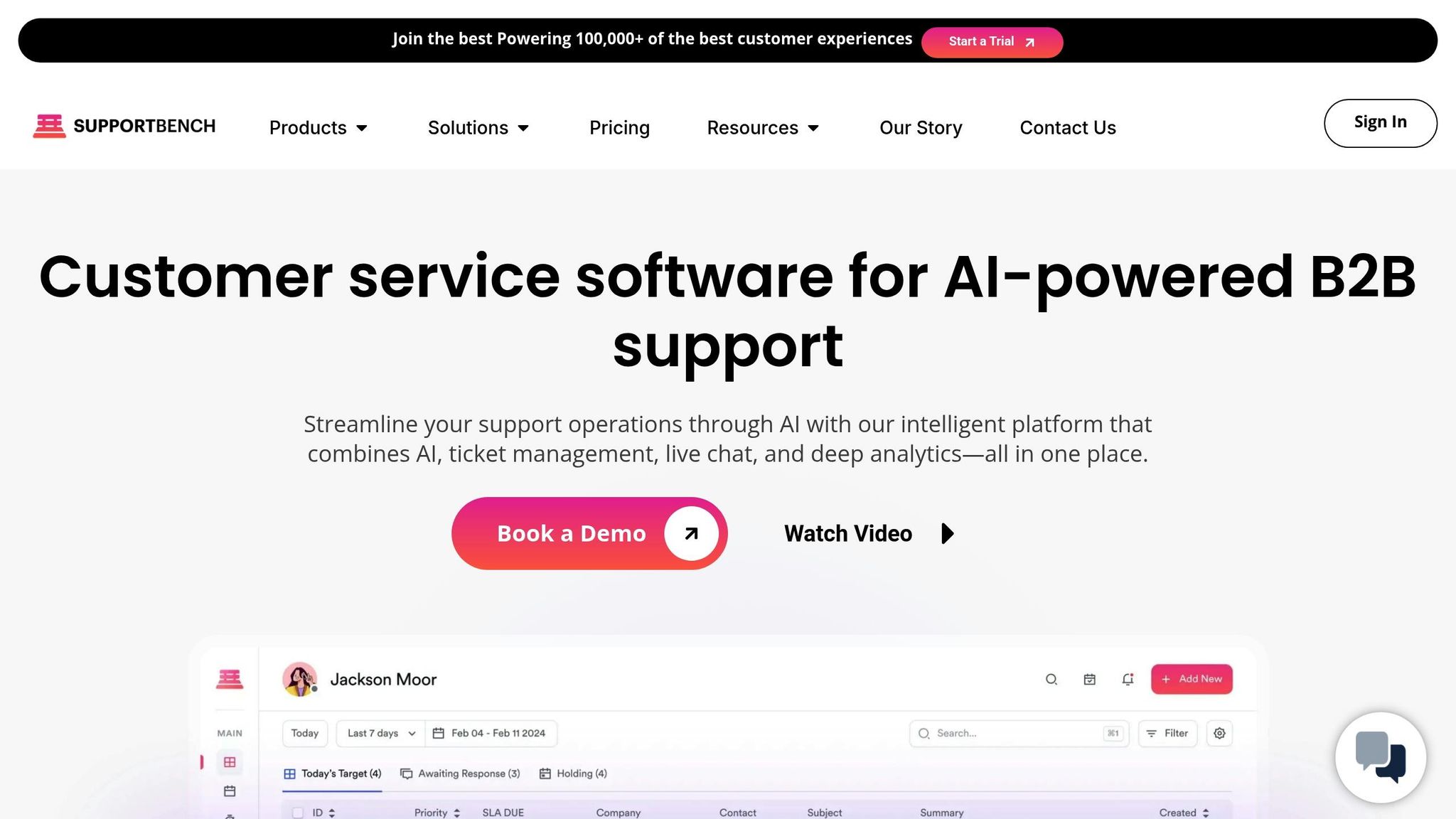
Supportbench is a great example of how an AI-native platform operates, especially for B2B support. Unlike older tools that require costly add-ons or premium plans to unlock advanced features, Supportbench includes enterprise-level AI capabilities at all pricing tiers – starting at just $32 per agent per month. From day one, users have access to features like predictive CSAT and CES scoring, AI-generated case summaries, sentiment analysis, and dynamic SLA management.
This platform is purpose-built for B2B teams managing complex, long-term customer relationships. Every feature, from account-level insights to renewal-aware SLAs, is designed to support proactive customer care. As Nooshin Alibhai, Founder and CEO of Supportbench, puts it:
"Supportbench stands out in AI by providing enterprise-grade automation at all levels. Its platform integrates predictive analytics, sentiment analysis, and SLA-driven workflows. Unlike legacy tools that gate advanced features behind premium tiers".
Supportbench also eliminates the need for extensive technical resources. Unlike legacy platforms that often require developers or consultants for setup and maintenance, Supportbench is easy to configure and manage. Teams can automate workflows, prioritize cases, and gain full visibility into account health – all without relying on IT. This streamlined approach helps B2B support teams maximize efficiency while minimizing costs, protecting both customer retention and revenue.
sbb-itb-e60d259
Side-by-Side Comparison: AI-Native vs. Legacy Tools

AI-Native vs Legacy Tools for B2B Account Management Comparison
Feature Comparison Table
When you put AI-native platforms and legacy tools side by side, the differences become striking. Here’s a breakdown of how they compare across key dimensions for B2B account management:
| Feature/Dimension | AI-Native Platforms | Legacy Tools |
|---|---|---|
| Data Model and Architecture | Unified, account-centric | Fragmented, ticket-based |
| Account Visibility | 360-degree views | Limited, siloed insights |
| Proactive Operations | Predictive and automated | Reactive and manual |
| AI Depth | Embedded AI in workflows | Bolt-on AI with add-on costs |
| SLA and Escalation Management | Dynamic, renewal-aware | Static and limited |
| Reporting and Forecasting | Predictive insights | Retrospective analytics |
| IT Dependency | Low, self-service | High, IT-heavy |
| Total Cost of Ownership | Cost-efficient, all-in-one | Expensive, fragmented stack |
This table clearly illustrates the advantages of AI-native platforms, setting the stage to explore how they deliver cost savings, reduce workloads, and enable predictive capabilities.
How AI-Native Platforms Reduce Costs and Workload
AI-native platforms streamline operations by automating manual tasks like data gathering, which significantly cuts costs and reduces workload. Instead of agents wasting time piecing together information from multiple systems – a challenge with over 50% of escalated tickets in legacy setups – AI-native tools pull data automatically from CRMs, usage histories, and internal databases. This automation allows agents to focus on solving problems rather than hunting for context.
The financial benefits are undeniable. For example, in June 2025, global retailer Lush consolidated its customer experience data onto a modern platform, achieving a 369% ROI. Naomi Rankin, Global CX Manager, reported that the system paid for itself in under a year and delivered $434,000 in annual savings by improving productivity and avoiding the need for additional staff.
AI-native tools also eliminate the hidden costs often associated with legacy systems. Legacy vendors frequently charge extra for advanced AI features or require pricey third-party integrations. In contrast, platforms like Supportbench include enterprise-grade AI tools – such as predictive CSAT scoring, sentiment analysis, and dynamic SLA management – at all pricing tiers, starting at just $32 per agent per month. This transparent pricing ensures teams can scale without unexpected cost increases.
Additionally, AI agents now handle up to 80% of customer interactions autonomously, even for complex issues that previously required human intervention. This reduces response times and frees up human agents for more intricate tasks. For instance, in June 2025, Catapult Sports used AI copilot features to manage global customer tiers. Thomas Powers, Vice President of Product Support, shared that the system cut first reply times by 50%, reduced resolution times by 21%, and decreased average handling time by 14%. These results show how automation not only trims costs but also boosts efficiency, enabling support teams to shift from reactive problem-solving to proactive customer success.
Predicting Account Health and Preventing Churn
AI-native platforms go beyond reducing workloads – they equip teams with predictive tools that enhance strategic oversight. While legacy tools focus on analyzing past performance, AI-native systems predict future trends, enabling proactive account management.
For example, real-time sentiment analysis acts like an early warning system, flagging dissatisfaction before it impacts renewals. These platforms create dynamic customer health scores by integrating data from CRMs, usage patterns, and support histories into a single, unified view. If a high-value account shows signs of trouble, the system not only alerts the team but also tightens SLAs and escalates cases to senior agents for immediate attention.
The results speak for themselves. In June 2025, Liberty London adopted AI to automatically label and route incoming tickets. Under Ian Hunt, Director of Customer Services, the company reduced first response times by 73% and increased CSAT scores by 9%. This wasn’t just about faster responses – it reflected smarter prioritization based on predicted customer needs and account risks.
Modern AI-native platforms also use confidence-gated automation to balance efficiency with human expertise. The system evaluates each interaction to decide whether to auto-respond, draft a reply for human review, or escalate to a senior agent. Routine inquiries, like billing questions, are resolved instantly, while more complex issues receive the attention they deserve. For B2B relationships, this balance ensures trust is maintained while reducing workloads, making it a win-win for both customers and support teams.
Conclusion: Choosing the Right Platform
What B2B Support Leaders Should Remember
AI-native platforms bring a modern approach to customer support, standing apart from the older, legacy tools in their design, cost efficiency, and operational capabilities. Unlike legacy tools, which treat each interaction as a fresh start, AI-native platforms like Supportbench maintain a continuous flow of account context. They incorporate CRM data, renewal schedules, usage trends, and customer health metrics into every conversation. This approach not only boosts efficiency but also highlights a striking cost advantage – legacy tools can have a total cost of ownership (TCO) up to 68% higher.
What’s more, AI-native platforms offer advanced features – like predictive CSAT scoring, sentiment analysis, and dynamic SLAs – at all pricing tiers, starting at just $32 per agent per month. But the benefits aren’t just about saving money. These platforms can autonomously handle up to 80% of tier-1 inquiries, freeing your senior agents to focus on more complex issues and proactive customer engagement.
These advantages make AI-native platforms a powerful choice for businesses aiming to modernize their support operations.
How to Move to an AI-Native Platform
Given the constraints of legacy systems, switching to an AI-native platform is a strategic necessity. However, making the move requires careful planning. Start by consolidating your knowledge base – a process that may take 20–40 hours. This step is critical because skipping it can lead to failure; in fact, 40% of AI implementations stumble in the first 90 days due to poorly prepared knowledge bases.
A phased rollout is the best way to begin. In the first week, route 10–20% of your traffic to the new platform to test its accuracy and identify any immediate gaps. Be prepared for a learning curve: a resolution rate of 35–45% in the first month is typical, but this can climb to 70–75% by the third month. Use confidence-gated automation to ensure AI only sends automatic responses when it’s highly confident, while flagging medium-confidence replies for human review. Additionally, dedicate two hours each week during the first 90 days to reviewing failed conversations and updating your knowledge base as needed.
Supportbench makes this transition easier by embedding AI into your existing workflows. This allows teams to move from simply managing tickets to proactively managing accounts – without the added complexity or costs associated with legacy systems.
FAQs
How do AI-native platforms help retain B2B customers?
AI-native platforms are transforming how B2B companies retain customers by using predictive insights and automation to improve the overall experience. By integrating AI into areas like case management, knowledge creation, and analytics, these platforms can identify potential churn risks, predict satisfaction levels, and notify account managers about problems before they become major issues. This proactive approach enables teams to address concerns early, fine-tune service agreements, and focus on high-priority accounts, making customers feel valued and supported.
Automation takes it a step further by simplifying workflows. AI-powered tools can assign tickets to the right experts, draft response templates for review, and even handle routine issues on their own. This gives support teams more time to engage in meaningful, personalized interactions that build stronger relationships. The result? A smooth, high-quality support system that fosters customer loyalty and ensures long-term business growth.
What are the cost benefits of switching from legacy tools to AI-native platforms?
Switching to an AI-native platform can cut costs dramatically when compared to traditional tools. Older systems often come with a base subscription fee, but that’s just the start. Features like AI capabilities, advanced workflows, or SLA management often require pricey add-ons. As your team grows, these extras can quickly drive up expenses, making the overall cost much higher than anticipated.
AI-native platforms, such as Supportbench, simplify this by bundling essential features – like AI-powered triage, knowledge management, and customer insights – into one straightforward subscription. This approach eliminates the need for extra add-ons, reducing both costs and administrative hassle. Plus, automation boosts efficiency, enabling teams to tackle more cases without needing to hire additional staff. The result? Lower per-ticket costs and a strong return on investment.
For many organizations, moving to an AI-native solution means more streamlined operations with pricing that scales as they grow – without the worry of hidden fees or surprise charges.
How do AI-native platforms help predict and prevent customer churn?
AI-native platforms use machine learning to dig into data from tickets, interactions, and product usage, spotting early indicators of customer churn. These systems keep an eye on important metrics like predicted CSAT (Customer Satisfaction Score), CES (Customer Effort Score), and renewal likelihood. They flag accounts that show risky patterns, such as a surge in ticket volume, frequent escalations, negative sentiment in communication, or a drop in product usage.
Once an account is flagged, the platform can step in automatically with preventive measures. For example, it might route cases to more experienced agents, suggest helpful knowledge articles, schedule proactive outreach, or tweak SLA priorities. These actions happen in real time, enabling support teams to tackle issues swiftly, enhance customer satisfaction, and retain valuable accounts – all while managing costs efficiently.