Choosing the right helpdesk platform in 2026 is critical for Canadian companies, especially with strict data sovereignty laws and the Buy Canadian Procurement Policy Framework in place. This policy favors Canadian-owned and operated solutions, ensuring compliance with federal standards like Protected B data classification and avoiding risks tied to U.S. jurisdiction laws like FISA. Here’s a quick summary of the best non-U.S. platforms:
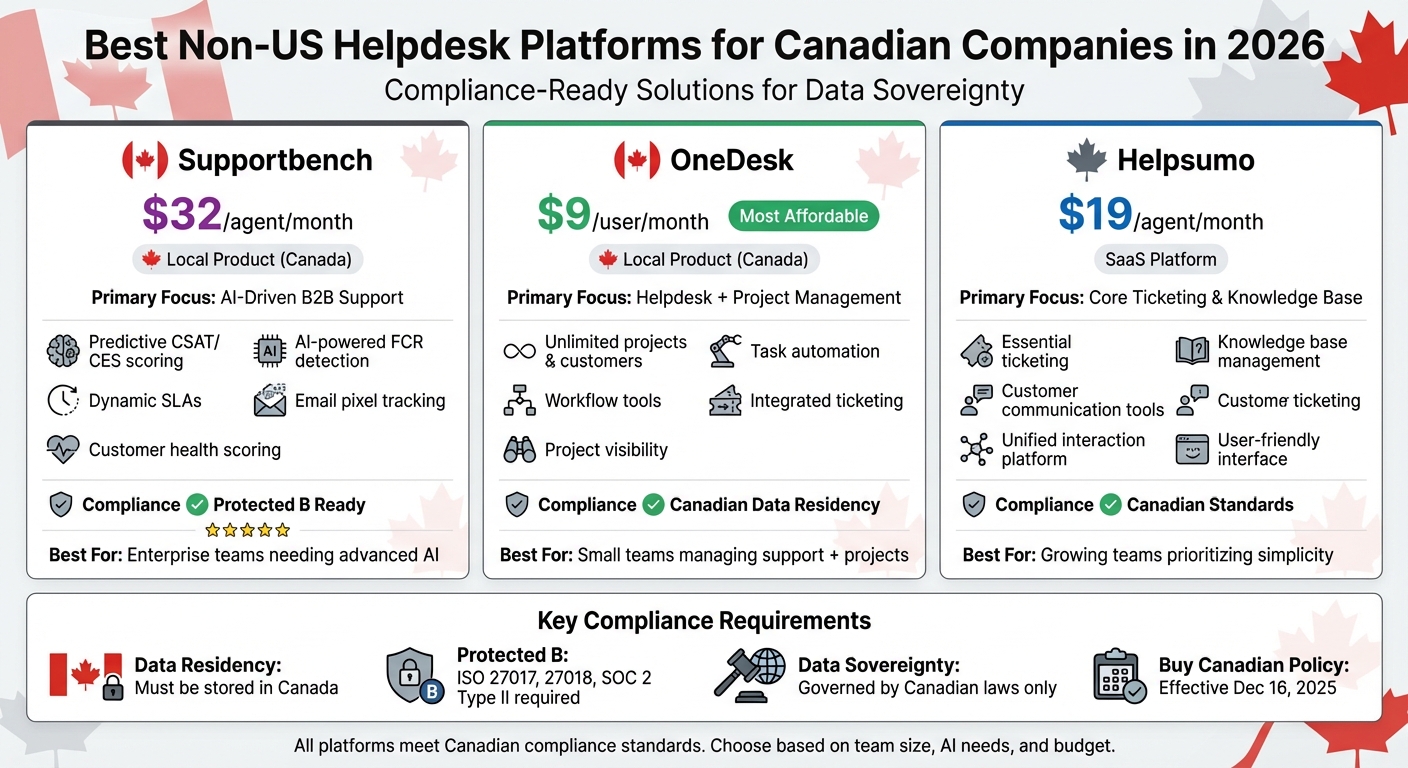
- Supportbench: A Canadian platform focused on AI-powered B2B support. Features include predictive customer satisfaction scoring, dynamic SLAs, and robust compliance with Canadian data laws. Pricing starts at $32/agent/month.
- OneDesk: Combines helpdesk ticketing and project management. Affordable at $9/user/month, it’s ideal for small teams needing basic tools with Canadian compliance.
- Helpsumo: Offers core ticketing and knowledge base features at $19/agent/month. A straightforward solution for growing teams prioritizing simplicity.
Why Non-U.S. Platforms Matter
- Data Sovereignty: Canadian platforms ensure data is stored and governed entirely within Canada, meeting federal security standards.
- Compliance: Only Canadian solutions can fully align with Protected B requirements, including ISO certifications and encryption key control.
- Risk Avoidance: U.S.-based platforms, even with Canadian data centers, are subject to U.S. laws, creating potential data exposure risks.
Quick Comparison
| Feature | Supportbench | OneDesk | Helpsumo |
|---|---|---|---|
| Price | $32/agent/month | $9/user/month | $19/agent/month |
| Focus | AI-driven B2B support | Ticketing + PM | Core ticketing |
| Compliance | Protected B ready | Canadian data | Canadian data |
| Unique Tools | AI insights, SLAs | Workflow tools | Simplicity |
For Canadian businesses, Supportbench stands out for its AI capabilities and compliance, while OneDesk is cost-effective for small teams, and Helpsumo offers an easy-to-use alternative. Choose based on your team size, compliance needs, and budget.
Comparison of Top Canadian Helpdesk Platforms 2026: Features, Pricing & Compliance
How Government Procurement Works for SaaS Platforms
In Canada, government procurement for SaaS platforms relies on pre-qualified supplier pools. This approach streamlines the process, ensuring vendors meet strict security and financial standards. Here’s a closer look at the main procurement methods and the role of CanadaBuys in the system.
Standing Offers and Supply Arrangements Explained
Standing Offers (SO) are agreements where suppliers commit to providing goods or services at pre-set prices and terms. However, these agreements only turn into contracts when the government issues a call-up. This means no payment is made until the government actually uses the service or product under the agreed terms.
Supply Arrangements (SA), on the other hand, create a list of pre-qualified suppliers that government agencies can approach for specific bids. For SaaS, the Software as a Service Supply Arrangement (SaaSSA) is mandatory for Protected B cloud requirements [5]. This process has two phases: first, suppliers must meet technical, financial, and security standards to qualify. Then, government agencies can request bids from this pre-qualified pool and award contracts based on established criteria [4].
The SaaSSA system classifies solutions by data sensitivity levels. For example:
- Stream 1 covers data up to Protected B and requires certifications like ISO/IEC 27017, 27018, and SOC 2 Type II.
- Stream 4 deals with Unclassified data and involves less stringent security checks [4].
To maintain security, the Canadian Centre for Cyber Security (CCCS) performs Information Technology Security (ITS) and Supply Chain Integrity (SCI) assessments roughly every six months [4].
Suppliers aiming to qualify for SaaSSA must also secure DOS (Designated Organization Screening) and DSC (Document Safeguarding Capability) credentials [4]. Companies interested in government contracts should actively monitor CanadaBuys for Request for Supply Arrangements (RFSA) opportunities and ensure they meet clearance requirements from Public Services and Procurement Canada (PSPC) [4].
CanadaBuys and Procurement Standards
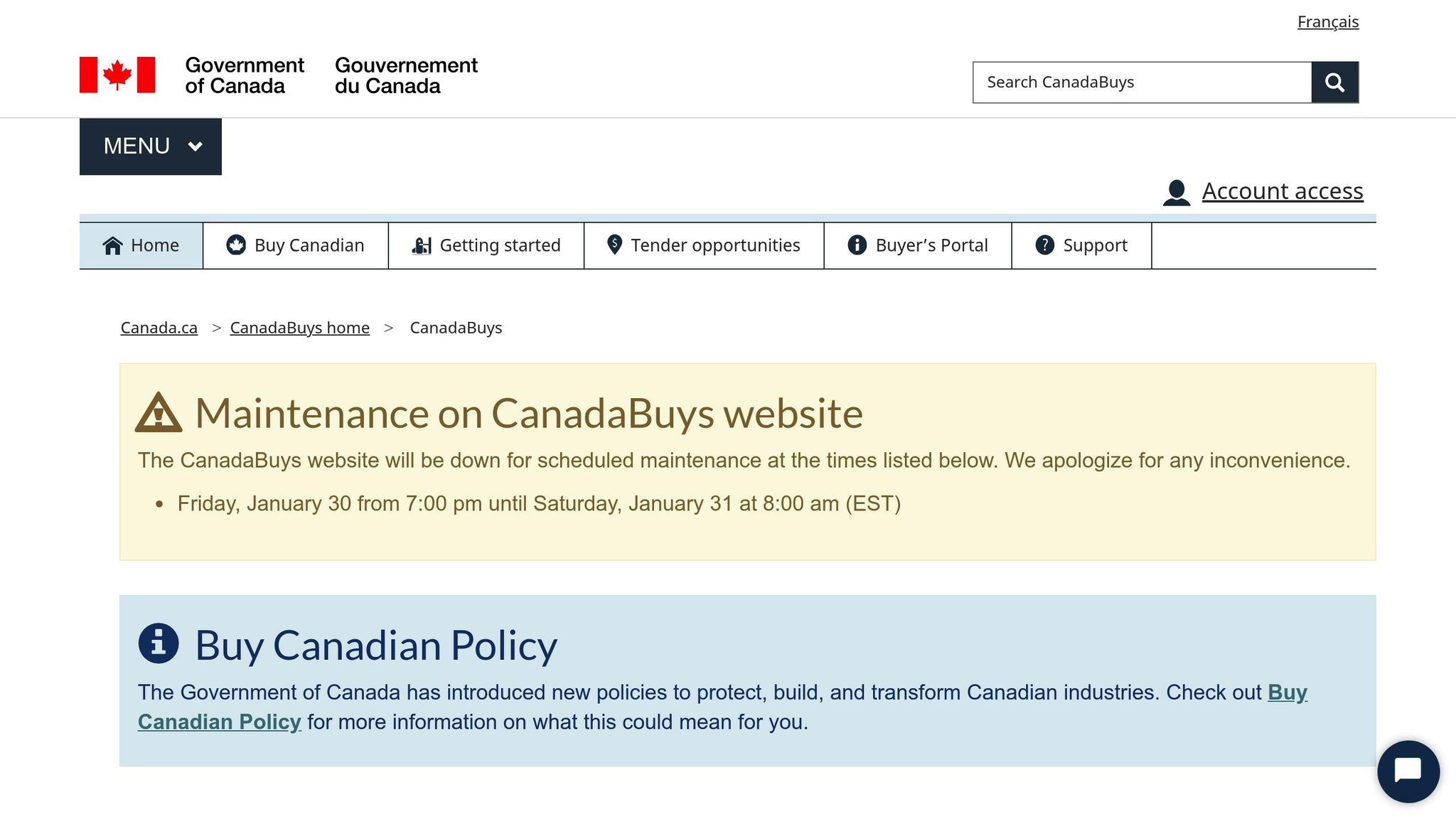
Once suppliers are pre-qualified, the CanadaBuys platform becomes central to federal procurement. Acting as the single access point for all federal procurement activities, CanadaBuys has replaced older systems like Buyandsell.gc.ca [8][9]. Through this platform, users can find tender opportunities and manage procurement processes. As highlighted in official statements:
Prioritizing Canadian suppliers, materials, and innovation – Buy Canadian Policy [8]
For those seeking helpdesk platforms, CanadaBuys provides tools like the Standing Offers and Supply Arrangements Application (SOSA App). This tool helps buyers verify whether SaaS vendors are pre-qualified for specific requirements, such as Protected B compliance [7]. It simplifies the decision-making process by confirming that platforms have already undergone rigorous technical and financial evaluations.
The SaaSSA pre-qualification process is ongoing, giving new Canadian helpdesk platforms the chance to enter the market at any time [4]. However, companies must first register through the Supplier Registration Information system to obtain a unique Business Number, which is essential for selling to the Government of Canada [4]. Since CCCS assessments happen in waves, timing is a key factor for businesses planning to enter this space.
sbb-itb-e60d259
Data Sovereignty in Canada: What You Need to Know
When choosing a helpdesk platform for operations in Canada, it’s crucial to understand the distinction between data residency and data sovereignty. Data residency refers to the physical location where your data is stored, while data sovereignty ensures that Canadian laws exclusively govern access and disclosure of that data [2].
Here’s the catch: even if your data is hosted in Canada, if the provider is based in the US, it may still fall under US laws like FISA, which could force disclosure without prior notice [2]. The Government of Canada’s white paper puts it plainly:
As long as a CSP that operates in Canada is subject to the laws of a foreign country, Canada will not have full sovereignty over its data [2].
This becomes especially relevant under the Buy Canadian Procurement Policy Framework, which went into effect on December 16, 2025. This framework prioritizes "digital and data sovereignty", requiring solutions governed exclusively by Canadian laws [1]. For companies managing sensitive customer data or working with government clients, opting for platforms that ensure true Canadian sovereignty – not just local hosting – can help mitigate risks tied to foreign legal reach.
Protected B Compliance Requirements
Protected B is a classification for data that, if compromised, could cause serious harm to individuals, organizations, or the government [10]. Canadian companies handling this level of data – whether through government contracts or sensitive customer information – must meet strict compliance standards when selecting helpdesk platforms.
The requirements are non-negotiable. All data must be stored within Canada [3] [6]. Additionally, Protected B compliance demands robust security measures like multi-factor authentication, strict access controls, and adherence to GC Cloud Guardrails, which must be implemented within 30 business days of gaining cloud account access [6].
For SaaS providers aiming to handle Protected B workloads, meeting these standards is no small feat. Required certifications include ISO/IEC 27017 (cloud security), ISO/IEC 27018 (protection of personal data in public clouds), and SOC 2 Type II [4]. Providers also undergo biannual Information Technology Security (ITS) and Supply Chain Integrity (SCI) reviews by the Canadian Centre for Cyber Security [4].
Protected B compliance operates on a shared responsibility model. The platform provider secures the cloud infrastructure (physical security, network controls), while your organization is responsible for securing the data within the cloud – this includes managing encryption keys, user permissions, and access controls [2] [10]. Critically, Canadian organizations must retain exclusive control over encryption keys for data at rest and in transit. This ensures that even if a foreign government requests access, the data remains encrypted and inaccessible without your keys.
Why Hosting Location and Data Residency Matter
Where your data is hosted determines which laws apply and who can access it. For Protected B workloads, the Government of Canada mandates that all data centers be located within Canada [3] [6]. This isn’t just a guideline – it’s a hard requirement that directly influences platform selection.
The implications go beyond government contracts. If your helpdesk platform stores data in US-based facilities, that data becomes subject to US legal processes. For businesses handling sensitive information – like financial records, health data, or proprietary details – this creates significant legal and operational risks.
Domestic data residency also supports business continuity. If geopolitical tensions or trade issues disrupt cross-border data flows, keeping your infrastructure and customer data within Canada ensures uninterrupted access and control [2]. This has become increasingly important as global governments tighten data localization requirements.
When evaluating platforms, confirm they can isolate your data within Canada and ensure this is explicitly stated in contracts [2]. Check whether the provider relies on foreign subcontractors for data processing, as this could expose your data to foreign laws even if the primary hosting is domestic [2]. Contracts should also include clauses requiring the provider to disclose any unauthorized access attempts, including those made under foreign court orders, unless prohibited by law [2].
| Requirement | Protected A | Protected B |
|---|---|---|
| Data Residency | Based on risk assessment [10] | Mandatory within Canadian borders [3] [6] |
| Security Controls | Baseline safeguards [10] | Rigorous baseline profile (ITSG-33, ISO 27001) [10] [2] |
| Certifications | ISO 27001 or SOC 2 Type II [4] | ISO 27017, ISO 27018, SOC 2 Type II [4] |
This table highlights the importance of domestic hosting for compliance and operational reliability. For Canadian companies dealing with sensitive support data or government contracts, the hosting location isn’t just a technical detail – it’s a strategic choice that impacts compliance, control, and resilience.
How to Evaluate Non-US SaaS Helpdesk Platforms
When selecting a non-US helpdesk platform, it’s essential to dig deep into three core areas: ownership and hosting location, support and subcontractor locations, and data processing and sovereignty features. These factors directly impact your ability to comply with Protected B requirements, ensure data sovereignty, and minimize potential legal risks.
Ownership and Hosting Location
Start by verifying who owns the platform and where your data will reside. Even if the platform is hosted in Canada, foreign-controlled providers could still be subject to non-Canadian legal jurisdictions.
For workloads classified as Protected B, the Government of Canada mandates that all computing facilities must be located within Canadian borders [3][6]. Confirm that the provider’s data centers, backups, and processing operations are contractually bound to stay in Canada.
To ensure compliance, request third-party audit reports, such as ISO/IEC 27001, ISO/IEC 27017, ISO/IEC 27018, or SOC 2 Type II certifications [10][4]. These audits independently verify both the location of data management and the security measures in place. Additionally, include clauses in your contract requiring the provider to report any unauthorized access attempts, including those initiated under foreign court orders (unless legally prohibited) [2].
Once ownership and hosting are verified, it’s time to assess where and how support is delivered.
Support and Subcontractor Locations
The physical location of support teams and subcontractors is just as critical as data hosting. Even if your data resides in Canada, foreign support staff could still be compelled by their local laws to disclose your information without prior notice [2].
Ask for details about the location of personnel with administrative or root-level access, as these roles have the greatest control over your data [6][4]. Also, check if the provider’s support staff meet Canada’s "Reliability Status" security screening standards [10][4]. Many SaaS platforms rely on Infrastructure as a Service (IaaS) or Platform as a Service (PaaS) layers, so it’s equally important to confirm that these subcontractors comply with Canadian residency and security standards [10].
"A software provider using an infrastructure provider to deliver a software as a service (SaaS) offering will inherit security controls from the infrastructure provider. In this case, the CSP is expected to obtain assurance that the underlying… offering… has implemented the appropriate controls."
For higher security needs, find out if the provider has undergone a Supply Chain Integrity (SCI) assessment by the Canadian Centre for Cyber Security. This assessment traces the geographic origins and ownership of all subcontractors involved [4].
Once support and subcontractor details are clear, shift your focus to how the platform processes and protects your data.
Data Processing and Sovereignty Features
Look closely at how the platform manages your data. One critical aspect is ensuring you retain exclusive control over encryption keys. By holding these keys yourself, even if a foreign government requests access, your data remains encrypted and inaccessible without your authorization [2].
Confirm that the platform uses encryption algorithms approved by the Communications Security Establishment (CSE) for data both at rest and in transit [10][6]. Additionally, check for features like multi-factor authentication (MFA), least privilege access controls, and dedicated administrative accounts, as outlined in GC Cloud Guardrails [6]. These security measures should be implemented within 30 business days of setting up your cloud account [6].
Lastly, ensure the contract includes a well-defined exit strategy. This should outline how your data will be returned in an agreed format and guarantee its certified destruction (aligned with ITSP.40.006) if you decide to switch providers [10]. These measures protect your ability to adapt to changing compliance requirements or move providers if needed.
| Evaluation Factor | Verification | Impact |
|---|---|---|
| Ownership Structure | Corporate headquarters, parent company jurisdiction, foreign subsidiaries [2] | Foreign ownership may expose data to non-Canadian laws, even if hosted locally |
| Data Center Location | Primary, backup, and disaster recovery sites [3][6] | Protected B data must remain within Canadian borders |
| Support Team Location | Physical location of staff with administrative access [6][4] | Foreign-based staff could be subject to local disclosure laws |
| Subcontractor Compliance | IaaS/PaaS provider certifications and locations [10] | Subcontractors must meet Canadian security standards |
| Encryption Key Control | Who holds and manages encryption keys [2] | Client-controlled keys prevent unauthorized foreign access |
| Exit Strategy | Data retrieval format and deletion certification [10] | Ensures flexibility to switch providers if compliance needs change |
Next, we’ll compare some of the top non-US helpdesk platforms based on these evaluation criteria.
Best Non-US Helpdesk Platforms for Canadian Companies in 2026
Here are three standout helpdesk platforms that cater to Canadian companies by meeting compliance standards, offering cost-effective pricing, and integrating AI-powered tools.
Supportbench: Built for AI-Driven B2B Support
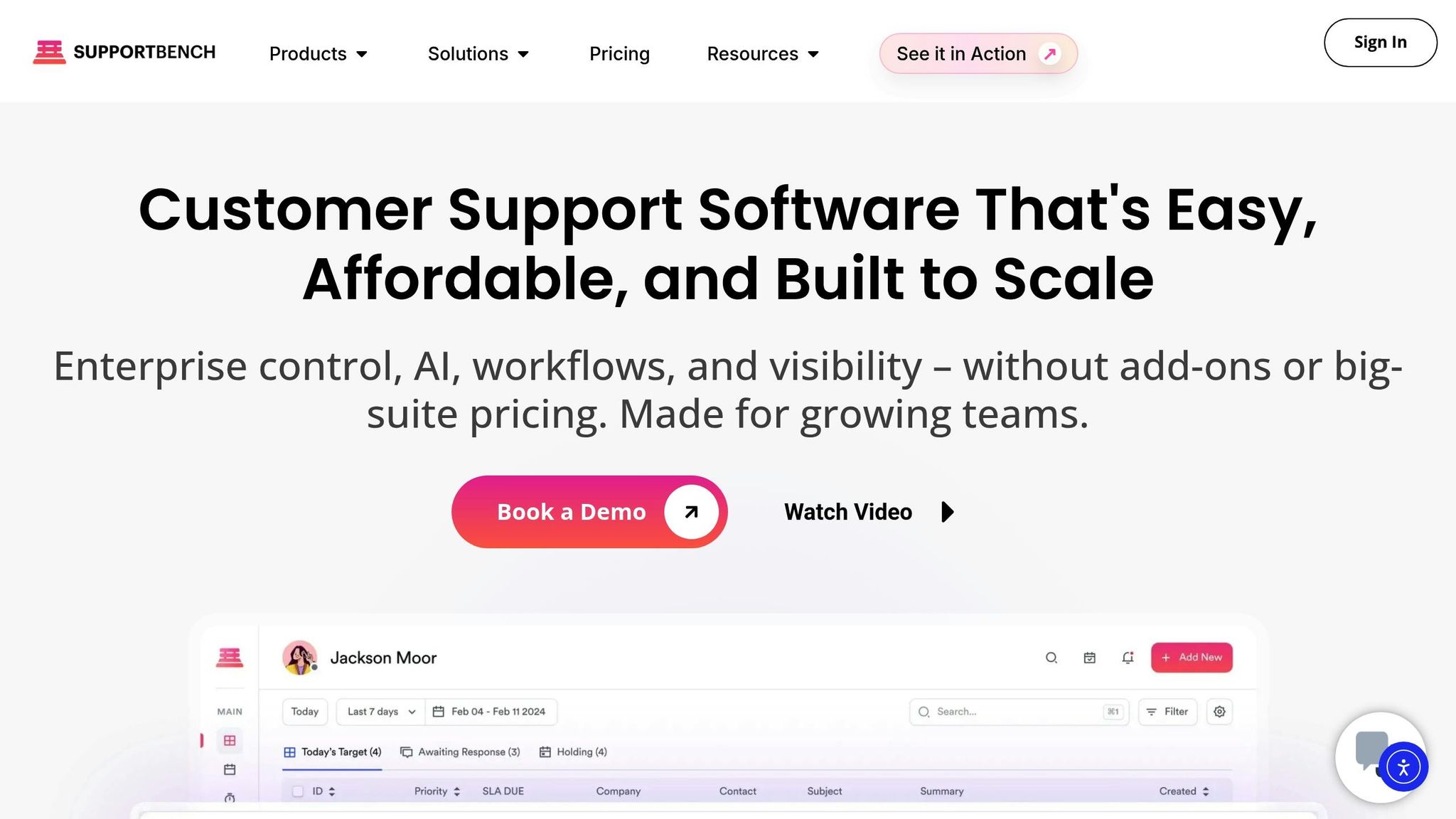
Supportbench, developed in Canada, is tailored for AI-enhanced B2B support operations. Unlike platforms that add AI as an extra feature, Supportbench incorporates it directly into its core functions, such as case management, knowledge creation, and workflow automation – all while adhering to Canadian compliance standards.
The platform offers features like predictive CSAT (Customer Satisfaction) and CES (Customer Effort Score) scoring by analyzing case history. Its AI-powered first contact resolution detection identifies cases resolved in the initial interaction, and dynamic SLAs adjust response times based on customer context, such as when a renewal is approaching. The email-like interface includes pixel tracking to monitor when customers open messages, giving agents real-time insights into customer engagement.
Oussama Bengagi, a customer service agent, shared his experience:
Supportbench really has kept me on top of my game, aiding me in prioritizing, organizing, and making juggling between 20 issues at the same time a lot less painful.
Supportbench is highly rated, earning a 5/5 on SoftwareSuggest, and is praised for its user-friendly design and tracking features. Pricing starts at $32 per agent per month, with enterprise-grade features – including integrated AI and live support – available from day one without extra costs.
Next, OneDesk offers a unique blend of ticketing and project management tools.
OneDesk: Simplifying Complex Workflows
OneDesk, another Canadian-built solution, combines helpdesk ticketing with project management. This dual functionality minimizes the need for multiple tools and improves visibility across workflows. Recognized as a "Local Product" in Canada, OneDesk enables teams to manage customer issues and internal tasks in one place, ensuring clear alignment between support efforts and project timelines – all while meeting local compliance standards.
With pricing starting at $9 per user per month, OneDesk is an affordable choice for Canadian businesses looking to streamline operations without compromising on productivity.
For teams prioritizing simplicity, Helpsumo offers a practical alternative.
Helpsumo: Essential Tools for Growing Teams
Helpsumo focuses on delivering core helpdesk functionalities, including ticketing, knowledge base management, and customer communication tools, starting at $19 per agent per month. Designed for growing teams that need a straightforward solution, Helpsumo ensures compliance with Canadian standards while avoiding the complexity of larger platforms.
Although it doesn’t offer the advanced AI features of Supportbench or the integrated workflows of OneDesk, Helpsumo remains a reliable and user-friendly option for teams aiming to improve their support processes.
Feature Comparison: Non-US Helpdesk Platforms
Here’s a side-by-side comparison of features, compliance, and pricing to help Canadian businesses choose the right platform for AI-powered B2B support and streamlined workflows.
| Feature | Supportbench | OneDesk | Helpsumo |
|---|---|---|---|
| Starting Price | $32/agent/month | $9/user license | $19/agent/month |
| Canadian Status | Local Product (Canada) | Local Product (Canada) | SaaS Platform |
| AI Capabilities | AI-native with predictive CSAT/CES, FCR detection, auto-responses, case summaries | Task automation | Basic support tools |
| Primary Focus | B2B enterprise support with dynamic SLAs | Helpdesk + project management | Core ticketing and knowledge base |
| Compliance | Canadian compliance, Protected B ready | Canadian data residency | Canadian standards |
| Unique Features | Email pixel tracking, customer health scoring, Salesforce sync | Unlimited projects and customers per plan | Unified interaction platform |
| User Rating | 5/5 on SoftwareSuggest | Recognized as Local Product | User-friendly interface |
This table highlights the core differences, but let’s break down how each platform aligns with specific operational needs.
Supportbench stands out with its built-in AI features, eliminating the need for costly add-ons. It uses predictive CSAT and CES scoring to anticipate customer satisfaction based on case history. Its AI-powered first contact resolution (FCR) detection identifies cases resolved on the first try, improving efficiency. Plus, it adheres to Canadian data sovereignty rules, making it ideal for enterprises handling sensitive information.
OneDesk offers the most affordable entry point at $9 per user license, making it a great choice for small teams managing support tickets and projects. Each plan includes unlimited customers and projects, removing scalability worries. Its combined helpdesk and project management functionality reduces the need for multiple tools, all while meeting Canadian compliance standards.
Helpsumo provides a straightforward solution at $19/agent/month, focusing on core ticketing and knowledge base features. It enhances response times without overcomplicating workflows, making it a solid choice for teams prioritizing essential support operations while staying compliant with Canadian standards.
For Canadian companies, the local status of Supportbench and OneDesk offers a significant advantage. Both platforms meet Canadian data residency requirements and operate under Canadian jurisdiction, minimizing risks tied to foreign laws like the U.S. CLOUD Act. This is especially crucial for organizations handling Protected B data or working with federal Standing Offers and Supply Arrangements.
How AI Features Improve Helpdesk Efficiency in 2026
AI has become a central part of modern helpdesk platforms, reshaping how customer support operates. By 2026, 79% of customer service organizations have adopted generative AI tools, with some companies reporting up to a 75% improvement in response times after implementation [11].
Some standout AI features include:
- Automated triage: AI categorizes and routes tickets based on intent, ensuring faster resolution.
- Chatbots: These handle Tier 1 queries around the clock, freeing up human agents for more complex issues.
- AI copilots: They assist agents by generating summaries, suggesting replies, and pulling up relevant knowledge base articles [11][12].
The financial and operational benefits are clear. For example, helpdesk workers now spend 26% less time on administrative tasks [13]. Brastel Co., Ltd., for instance, uses automation to manage nearly 2,000 tickets monthly, cutting resolution times by 35% and saving an average of 8 minutes per ticket [14]. Similarly, Fisher & Paykel transformed their 10,000+ article knowledge base into an AI-powered tool that provides instant guidance. This change boosted online self-service rates from 33% to 65% while reducing the need for manual training [13].
AI also empowers helpdesks with strategic insights. Tools like predictive analytics and sentiment analysis mine ticket data to identify patterns, predict customer churn, and prioritize urgent issues before they escalate [11]. This is especially crucial in B2B settings, where losing a single account can have major financial repercussions. Platforms such as Supportbench take this further by offering predictive CSAT and CES scoring, enabling teams to gauge customer satisfaction based on case history – no surveys required.
Conclusion: Choosing the Right Helpdesk Platform for Canadian Companies
In 2026, selecting a helpdesk platform means finding the perfect balance between meeting Canadian compliance standards, ensuring data sovereignty, and boosting operational efficiency with AI-driven features. Thanks to the Buy Canadian Procurement Policy Framework, federal agencies and many private organizations now prioritize digital solutions sourced and governed within Canada [1]. This policy ensures platforms not only meet regulatory requirements but also deliver strong performance.
For businesses managing Protected B data or working on government contracts, thorough verification is a must. Look for platforms with certifications like ISO/IEC 27017, ISO/IEC 27001, and SOC 2 Type II. Additionally, ensure the platform has passed ITS and SCI assessments conducted by the Canadian Centre for Cyber Security [4]. A critical factor is data residency – your platform must store data within Canadian borders to comply with regulations [6].
Beyond compliance, AI-powered features can significantly enhance efficiency. Modern platforms with built-in AI capabilities outperform traditional options by offering tools like predictive CSAT and CES scoring, automated ticket triage, and knowledge base generation – all without extra costs. The right platform seamlessly integrates regulatory compliance with operational advancements.
Cost transparency is another key consideration. Many Canadian IT providers offer competitive pricing compared to U.S. counterparts while aligning better with local security standards [15]. Opting for an affordable, compliant, and AI-enabled platform maximizes its strategic value.
Lastly, check if the platform is pre-qualified under the Software as a Service Supply Arrangement (SaaSSA). Providers under this arrangement have already met essential technical, financial, and security benchmarks, simplifying procurement and reducing risks [4]. The ideal helpdesk platform should enhance both your compliance framework and operational efficiency – without forcing a trade-off between the two.
FAQs
Why is data sovereignty crucial for Canadian companies when selecting helpdesk platforms?
Data sovereignty matters for Canadian companies because it ensures their digital assets – like customer information and sensitive data – are stored and managed within Canada. This approach helps businesses meet privacy laws, federal procurement policies, and security standards, while minimizing risks such as data breaches or unauthorized access.
For companies handling government contracts, choosing a helpdesk platform that supports Canadian data residency is crucial. Platforms that meet standards like the "Protected B" classification help organizations stay compliant, protect sensitive information, and align with Canada’s focus on digital sovereignty and operational security.
How do Canadian helpdesk platforms meet Protected B compliance standards?
Canadian helpdesk platforms ensure Protected B compliance by adhering to strict cybersecurity and data sovereignty standards set by the Government of Canada. A key part of this is following the Cloud Guardrails framework, which specifies security controls, secure development protocols, and ongoing monitoring to protect sensitive data.
Additionally, these platforms must meet federal requirements mandating that Protected B data is stored within Canada or in approved secure locations. This approach guarantees data residency and sovereignty, keeping sensitive government information protected under Canadian law. By meeting these rigorous standards, Canadian helpdesk platforms deliver secure and compliant solutions for handling Protected B data.
What AI features should Canadian companies prioritize in helpdesk platforms to boost efficiency?
Canadian businesses have a real opportunity to use AI tools to make their operations smoother and improve how they interact with customers. Here’s how:
- Automated ticket handling: AI can classify and route customer inquiries to the right agents faster, making sure issues are addressed quickly and efficiently.
- AI-powered chatbots: These bots offer 24/7 support for common questions, cutting down response times and keeping customers happy.
But it’s not just about quick responses. AI-driven analytics play a big role too. They help businesses spot trends, recognize recurring problems, and make smarter decisions on how to improve services. Plus, these tools can do all of this while sticking to Canada’s strict data residency and sovereignty standards.
Another must-have? Multilingual support. With Canada’s diverse population, using natural language processing (NLP) to communicate in multiple languages is a game-changer for reaching and serving more people effectively.
When choosing an AI platform, it’s important to ensure it aligns with government procurement policies. This means taking a close look at things like where the data is hosted, who owns it, and what kind of support services are available.
By embracing these AI tools, Canadian companies can operate more efficiently, offer better customer experiences, and stay compliant with regulations – all at the same time.