

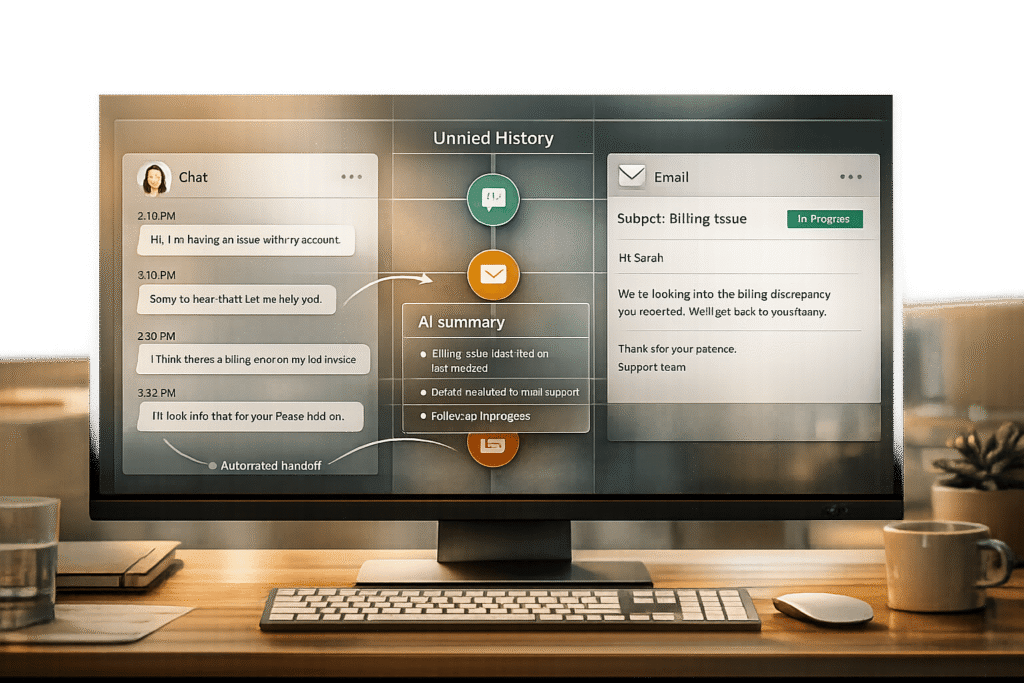
Preserving customer context between chat and email is critical to improving customer satisfaction, reducing frustration, and enhancing support efficiency. When context is lost, customers are forced to repeat themselves, agents waste time piecing together information, and resolution times increase. Here’s how you can ensure a smooth transition:
- Centralized Customer History: Use a single platform to consolidate chat transcripts, email tickets, and past interactions.
- Standardized Handoff Processes: Automate workflows to transfer data, like customer details and chat logs, between systems seamlessly.
- AI Tools: Leverage AI for conversation summaries, sentiment tracking, and intent analysis to maintain continuity and speed up resolutions.
- Agent Training: Equip agents with skills to document and retrieve customer interactions effectively, ensuring consistency across channels.
- Key Metrics: Track First-Contact Resolution (FCR), Customer Satisfaction (CSAT), Customer Effort Score (CES), and agent productivity to measure success.
Supportbench is an example of a platform that integrates chat and email seamlessly, using AI to summarize interactions, flag urgent cases, and provide a unified view of customer data. Businesses that prioritize context retention see lower churn rates, faster resolutions, and happier customers. The right tools and practices ensure customers never have to start over.
Why Customer Context Gets Lost Between Intercom and Helpdesk Systems
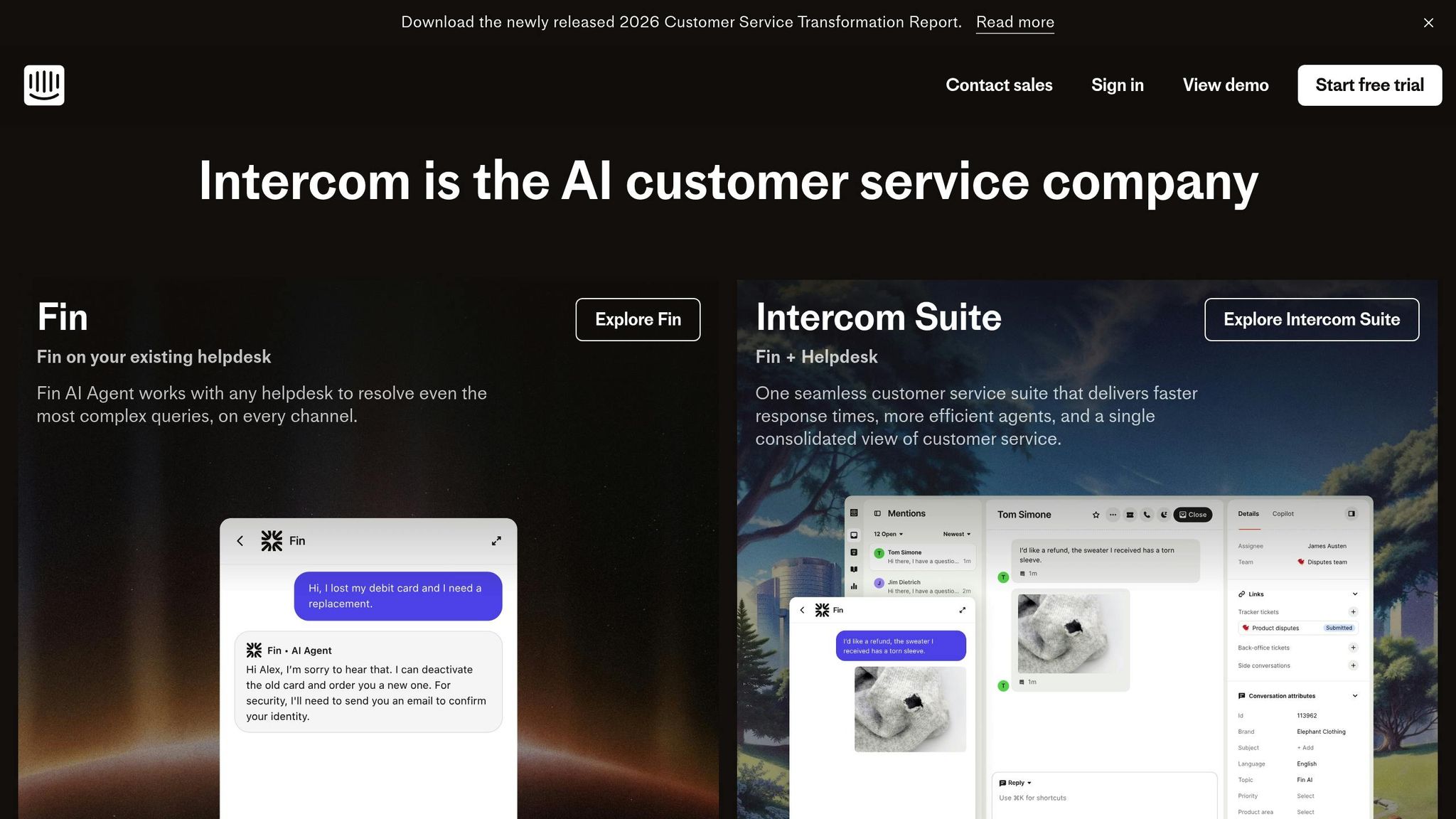
Disconnected Systems and Fragmented Data
The root of the problem lies in how companies manage their data. Instead of organizing around the customer, they structure it by system. For example, Intercom logs might capture chat interactions, while helpdesk systems focus on ticket statuses and resolution times. But neither platform fully reveals the why behind customer actions – what drives their behavior, their frustrations, or their emotional state during transitions.
This disconnect highlights the concept of "Reverse Conway’s Law", as described by marketing technologist Frans Riemersma:
"AI is forcing collaboration and shared context across teams – a kind of Reverse Conway’s Law in action. To make AI useful, companies must organize around shared context, not shared systems".
Without a unified perspective on the customer journey, agents are left to cobble together bits of information from different platforms. This fragmented approach often results in missed details that could otherwise expedite problem-solving.
Manual Handoffs Create Errors and Gaps
Fragmented data isn’t the only issue – manual processes compound the problem. When a customer moves from chat to email, for instance, agents must manually transfer context. This involves copying customer notes, summarizing conversations, or even asking customers to repeat themselves. These steps are not only time-consuming but also prone to human error. As Help Scout points out:
"When switching between support agents or channels, a customer’s biggest worry is that their progress with your team will be lost".
Manual handoffs introduce gaps that slow down resolutions and frustrate customers.
In January 2024, Joe Emison, co-founder and CTO of Branch, shared how implementing a centralized communication platform significantly streamlined workflows. By reducing app switching, each team member saved over an hour daily, resulting in a productivity boost valued at $211,250.
Inconsistent Handoff Practices Across Teams
Even when integration is possible, inconsistent handoff practices across teams create additional barriers. Some teams rely on detailed internal notes, while others might forward conversations with minimal context. These variations – whether in tagging methods, escalation protocols, or documentation – break the continuity of the customer journey.
For example, Trish Bingham, VP of Client Services at Boostability, demonstrated how centralized analytics tools could transform operations. By tracking performance and workload across teams, her department cut response times by 2.5x compared to their previous manual setup. Without such coordination, handoffs remain unreliable, accountability becomes fragmented, and customers endure repeated explanations and delays.
These challenges emphasize the growing need for standardized, AI-driven solutions that maintain context throughout the customer journey.
sbb-itb-e60d259
Automate Email replies with ChatGPT: Great for Context-Aware Auto Replies
How to Preserve Customer Context Across Chat and Email
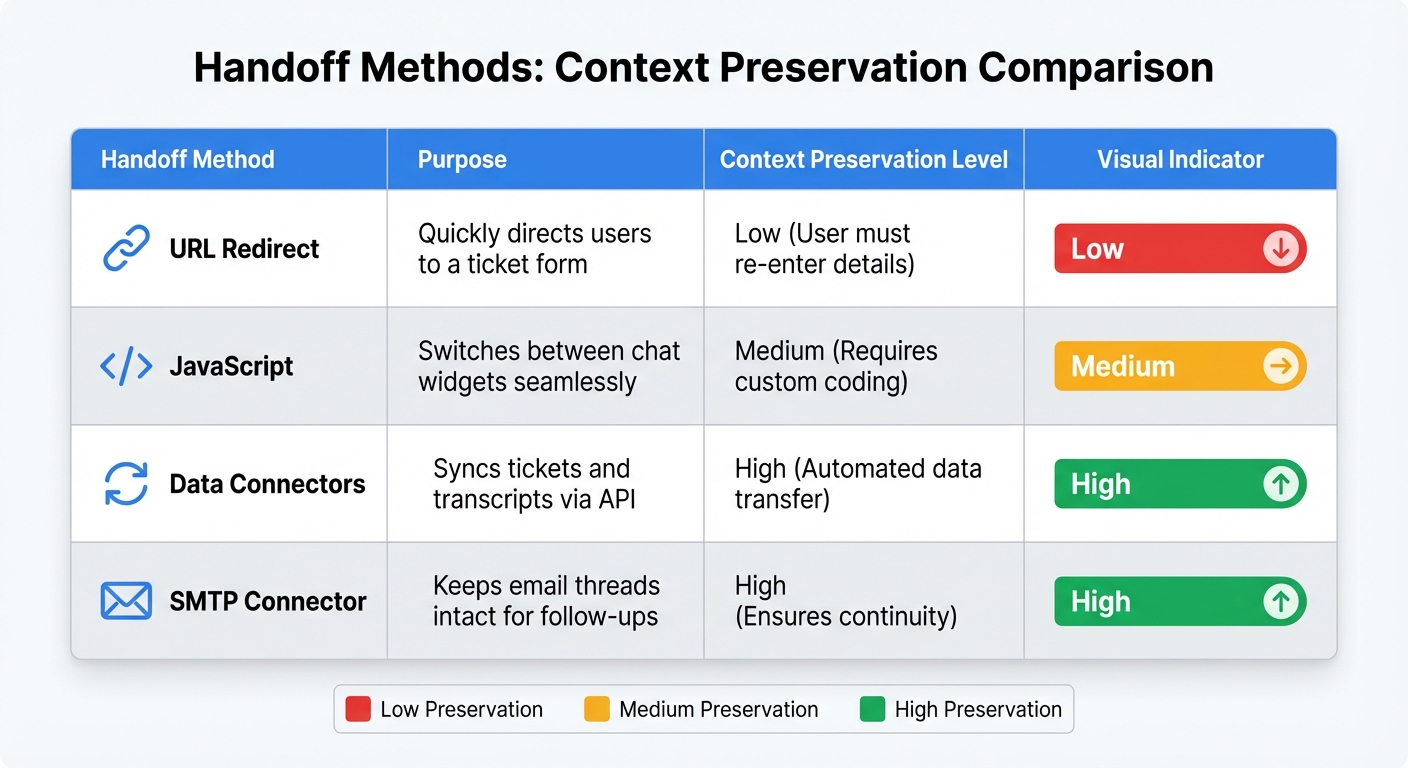
Handoff Methods for Preserving Customer Context Between Chat and Email
To tackle issues like fragmented data and manual errors, you need systems and workflows that keep customer context intact without requiring repetition. This involves centralized data management, standardized processes, and comprehensive agent training.
Use Centralized Customer History and Case Management
A centralized system for customer data is key. By consolidating chat transcripts, email tickets, and historical interactions into one platform, agents can access the complete customer journey without juggling multiple tools.
Susanna Tham, Service Experience Lead at Quandoo, highlighted the benefits of this approach:
"Intercom’s Knowledge Hub has made it so easy to see and manage everything that our support team needs in one place and has made our lives so much easier".
Quandoo integrated content from sources like Guru, Confluence, and Notion, ensuring that both AI tools and human agents rely on the same information.
Another game-changer is bidirectional history sync. Platforms that automatically import closed tickets from systems like Salesforce provide agents with a comprehensive view of past interactions. For instance, some tools sync up to 10,000 closed conversations daily, so when a customer starts a new chat, the agent immediately has access to previous email exchanges. This seamless integration supports smooth handoffs between channels.
Create Standard Handoff Protocols
Manual handoffs can lead to errors and delays. Automated workflows help capture and transfer critical customer details effectively.
For example, chat workflows can immediately collect key information like email addresses, account IDs, and subscription types. Using API-based ticket creation, this data – along with the full conversation transcript – can be automatically passed to the helpdesk system. This eliminates manual data entry, reducing mistakes and saving time.
| Handoff Method | Purpose | Context Preservation Level |
|---|---|---|
| URL Redirect | Quickly directs users to a ticket form | Low (User must re-enter details) |
| JavaScript | Switches between chat widgets seamlessly | Medium (Requires custom coding) |
| Data Connectors | Syncs tickets and transcripts via API | High (Automated data transfer) |
| SMTP Connector | Keeps email threads intact for follow-ups | High (Ensures continuity) |
Having fallback mechanisms is crucial. If an API call fails or a system goes down, redirect customers to a backup ticket form or provide a direct support email address. This ensures no conversation is lost, even during technical hiccups.
While automation handles much of the heavy lifting, well-trained agents are essential for managing exceptions and ensuring clarity.
Train Agents on Context Preservation
Technology alone isn’t enough – agents need the right skills to document and retrieve customer interactions effectively. This becomes even more critical as AI takes over routine queries, leaving agents to handle complex, nuanced cases.
Training should focus on channel-specific communication. Chat requires a quicker, conversational tone, while email demands a more formal and detailed approach. Role-playing exercises can help agents practice transitioning between these channels seamlessly.
Investing in training pays off. Companies that prioritize agent development report a 21% rise in profitability and a 30% improvement in employee retention.
Key skills like active listening and memory retention are vital. Agents should thoroughly understand customer needs during the initial interaction and document important details for future reference. Techniques like "shadowing", where new hires observe experienced agents, can help them learn how to navigate tools while maintaining a smooth conversation flow. Regular team discussions on past successes and challenges also encourage continuous improvement.
Using AI to Maintain Context During Handovers
AI tools are transforming how customer context is preserved during transitions between communication channels. By automating the capture, organization, and transfer of critical details, these tools help reduce errors and speed up resolutions.
AI Conversation Summaries
AI-generated summaries simplify long chat histories into concise internal notes, making it easier for agents to quickly review key details. These summaries are posted as internal notes, visible only to teammates, ensuring agents stay informed without cluttering the customer-facing transcript. For instance, when an AI bot like Fin hands off a conversation to a human agent, the summary outlines what the bot attempted to resolve, allowing the agent to seamlessly continue the interaction.
"Use AI summarize to create an AI-generated summary of a customer conversation or ticket before passing to another teammate." – Intercom
This feature significantly reduces the mental effort required to process past interactions by delivering essential highlights instantly. Workflows can even be configured to automatically generate a summary note as soon as a conversation is assigned to a specific team. This is particularly beneficial when a closed chat reopens as an email or ticket, helping agents quickly catch up on the prior interaction. Summaries are triggered after three messages and include frequency limits to prevent excessive notifications.
In addition to summarizing, AI enhances context by analyzing customer sentiment and intent.
Sentiment and Intent Tracking
Capturing how a customer feels and what they want to achieve is as important as understanding their words. AI continuously monitors sentiment and intent throughout conversations, providing agents with valuable context during handovers. For example, sentiment analysis can flag interactions where customers express frustration or urgency, prompting agents to adjust their tone accordingly.
Intent tracking identifies the customer’s goals, context, and urgency at the start of the interaction. This ensures that when a conversation moves from chat to email, the receiving agent knows exactly what the customer is trying to accomplish – without requiring them to repeat themselves. This is critical, especially as 82% of customers prefer more human interaction in their support experience. Efficient context handovers from AI to human agents play a key role in meeting these expectations.
Angelo Livanos, Vice President of Global Support at Lightspeed, highlighted the impact of this approach after adopting Intercom’s Fin AI Agent in early 2024:
"Fin is in a completely different league. It’s now involved in 99% of conversations and successfully resolves up to 65% end-to-end – even the more complex ones."
Automated Context Handover Prompts
AI doesn’t stop at summarizing – it actively supports agents during transitions by offering instant answers and suggesting next steps. Tools like Copilot provide real-time access to conversation history and internal documents directly within the agent interface, saving time spent searching for context manually.
Features like AI Autofill streamline processes by automatically populating ticket titles and descriptions, while Data Connectors use APIs to transfer customer information and conversation data seamlessly.
The results speak for themselves. Agents using AI Copilot were able to close 31% more customer conversations daily compared to those not using the tool. Angelo Livanos shared:
"Our agents are dramatically more efficient when using Copilot. In testing, agents using Copilot were able to close 31% more customer conversations daily, compared to agents not using Copilot."
To optimize these tools, set up workflows that trigger summary notes after a bot hands over a conversation to a teammate. Additionally, enable AI Autofill in workspace settings to ensure every ticket created from a chat includes all relevant details automatically. These AI-driven handover prompts ensure smooth transitions between channels, maintaining consistent customer context throughout the support process.
How Supportbench Maintains Context Across Chat and Email
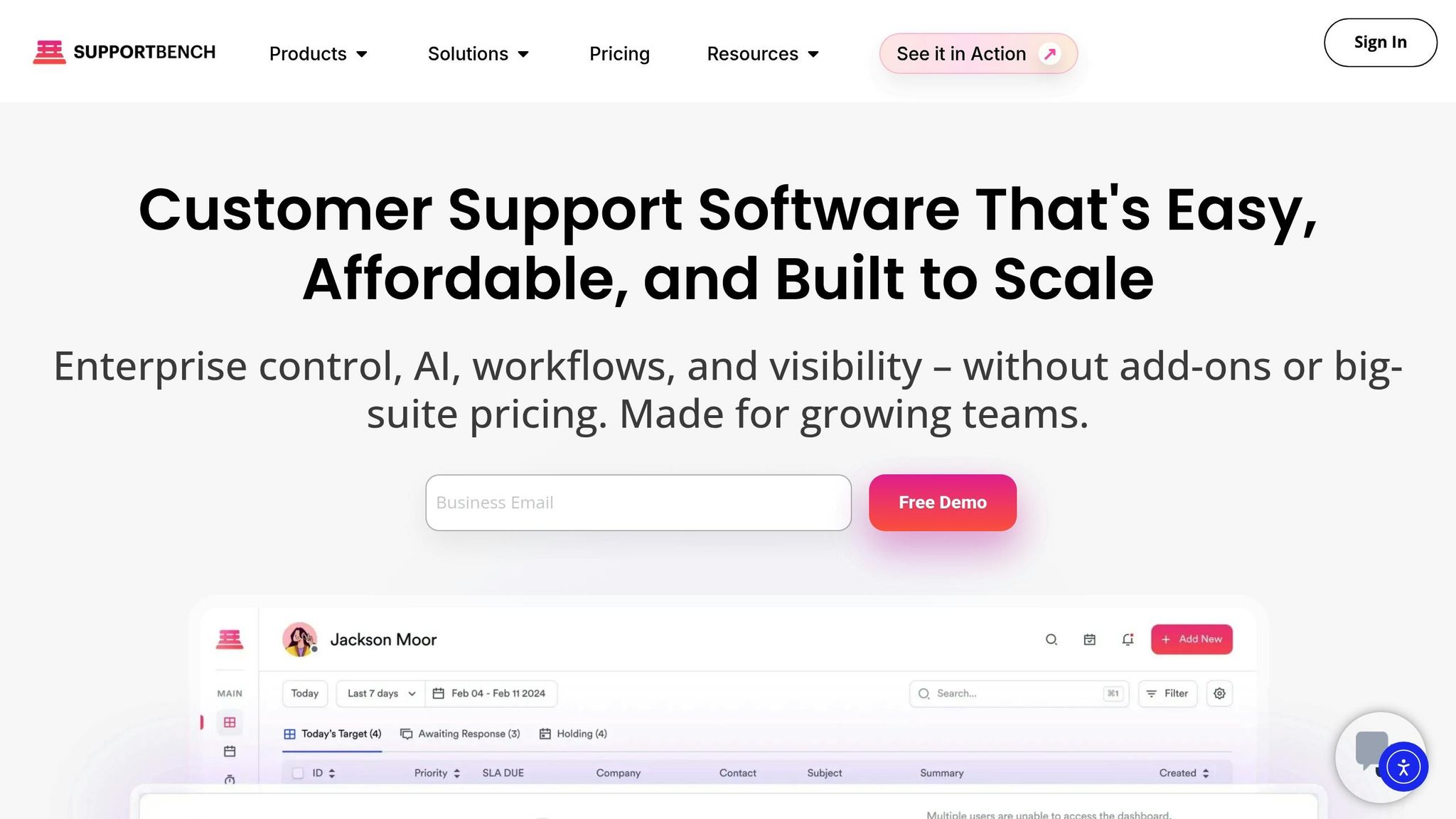
Supportbench takes an integrated approach to ensure customer context is never lost when transitioning between chat and email. By treating every interaction as part of a unified customer record, the platform eliminates the hassle of switching systems or manually transferring information. For example, chats initiated in Intercom are seamlessly converted into cases, giving agents full visibility into the customer’s history without missing a beat.
Built-In AI for Context Preservation
Supportbench’s AI Copilot is a game-changer for teams handling complex, long-term cases. It instantly summarizes past interactions and provides predictive insights into customer sentiment and emotions. When a case moves from chat to email, the AI generates a concise summary that outlines key points, customer needs, and actions already taken. If a customer expressed frustration during a chat, the system flags the follow-up email for special attention, allowing agents to tailor their approach. Research indicates that AI-driven service models can cut resolution times by 87% and boost CSAT scores by 5% within three months.
The platform also uses intelligent ticket routing to assign cases based on priority, topic, customer value, or emotional tone. As James Johnston, CEO of Global Management Academy, explains:
"AI can ingest customer inputs (text, chat, call transcript) and interpret intent, sentiment, urgency – enabling faster routing to the correct human or full automation if appropriate."
Additionally, Supportbench supports Knowledge-Centered Service (KCS) workflows, enabling agents to convert resolved cases into knowledge base articles effortlessly. This not only preserves context for future issues but also helps reduce repetitive queries.
Customizable Workflows and SLA Management
Supportbench adapts to high-priority cases with dynamic SLA adjustments, ensuring urgent issues flagged during a chat are addressed promptly when transitioned to email. For instance, if a customer nearing renewal or marked as high-value raises a concern, the system tightens SLAs for faster resolution. Configurable workflows further streamline the process by triggering actions like generating summary notes during handoffs or escalating cases based on sentiment analysis. These features reduce manual effort and maintain consistency across teams, ensuring customer context is preserved at every step.
360-Degree Customer Visibility
Supportbench consolidates all customer interactions into a single, unified dashboard, offering a bird’s-eye view of the customer journey. This includes interaction history, escalation trends, and customer health scores. With real-time sentiment analysis and predictive CSAT and CES scoring, teams can proactively identify potential churn risks or high-effort cases before customers even complete a survey. For example, if the AI detects frustration through language or interaction patterns, the case is flagged for immediate attention. The system also suggests the next best response based on previous cases and knowledge base data, ensuring accuracy and a consistent tone across channels. According to research, 71% of service professionals reported higher job satisfaction when using AI and automation.
Metrics to Track Context Preservation Success
Tracking the right metrics is essential to understanding how well your customer interactions flow and how efficiently your team operates. These metrics shed light on the impact of maintaining context across communication channels.
First-Contact Resolution (FCR) Rates
FCR is a strong measure of effective context preservation. When agents have access to a customer’s full history, they can resolve issues without asking the customer to repeat themselves. This leads to higher FCR rates, showing that transitions between channels are smooth. On the other hand, a lack of context slows resolutions. Companies that improve context sharing often see satisfaction scores rise by 20 points and service costs drop by up to 20%. Using AI-generated summaries during handoffs ensure the next agent instantly understands the purpose of the interaction, speeding up resolutions even further.
Customer Satisfaction (CSAT) and Customer Effort Score (CES)
CSAT gauges how satisfied customers are immediately after an interaction, such as when transitioning from chat to email. It measures whether their expectations were met. CES, on the other hand, focuses on how much effort customers had to exert during their journey. This includes whether they had to repeat information due to lost context across channels. CES is often seen as a better predictor of loyalty than CSAT, as reducing effort has a stronger effect on retention. As Nextiva puts it:
"Reducing customer effort is one of the best ways to increase loyalty, even more than delighting them."
Sending post-interaction surveys ensures you gather immediate feedback. This helps confirm that lower effort translates into greater loyalty. Combining CSAT and CES scores can also highlight areas for improvement, especially if high satisfaction is paired with high effort.
Agent Productivity and Resolution Times
Context preservation doesn’t just benefit customers – it also boosts agent performance. AI-generated summaries streamline handoffs, enabling agents to work faster and more effectively. Metrics like AI involvement rate, resolution rate, and the accuracy of handoffs are crucial to monitor. Isabel Larrow from Anthropic highlights the operational benefits:
"With AI, we’ve been able to fundamentally change our support strategy… Addressing volume in this way lets us hire more intentionally and scale our team in a more cost effective way."
Tracking multi-handoff conversations is particularly important, as these often lead to increased customer effort and reduced agent productivity. Using AI reporting to identify recurring issues that cause extra handovers allows you to optimize processes and create targeted resources, ultimately improving resolution rates and agent efficiency.
Conclusion
Losing customer context between Intercom chat and your helpdesk wastes time, money, and patience. Every time a customer has to repeat their issue, trust takes a hit, satisfaction dips, and resolution times stretch out. The fix? Unified systems that connect the dots, clear handoff protocols to maintain consistency, and AI tools that keep the context intact across every interaction.
As Kapture CX aptly put it, "In customer service, forgetting is costly and often unforgivable." Businesses that prioritize context see the payoff in higher customer lifetime value and lower churn rates. AI features like summarization, sentiment analysis, and smart routing turn messy manual handovers into smooth, efficient transitions.
Supportbench tackles these challenges head-on with its built-in Intercom integration. It automatically converts chats into cases, offers AI-powered summaries to bring agents up to speed in no time, and provides a complete view of the customer, eliminating the need for endless tab-switching. Barak Elisha, Customer Success Manager at Gifted, shares, "The AI Inbox features are awesome! The summarize option makes it easy to summarize long conversations and saves significant time."
Tracking metrics like First-Contact Resolution (FCR), Customer Satisfaction (CSAT), Customer Effort Score (CES), and agent productivity ensures these efforts are not just theoretical but measurable. These metrics confirm the operational upgrades discussed throughout this article. By combining effective workflows, AI-driven tools, and platforms designed for B2B complexities, businesses can shift from reactive support to proactive, relationship-focused support that builds loyalty.
The real question isn’t whether to preserve context – it’s whether your current tools are equipped to make it happen. Modern support teams need systems that scale seamlessly, leverage AI effectively, and avoid unnecessary IT burdens or costly add-ons. The right approach transforms customer service from a challenge into an opportunity.
FAQs
What data should be captured before moving a chat to email?
Before moving a chat conversation to email, it’s essential to gather key customer details to maintain context. This includes the customer’s name, email address, company information, and specifics about their inquiry – like the issue at hand, steps they’ve already taken, and the chat’s history. Make sure to also log recent messages and any relevant notes to avoid covering the same ground repeatedly. These practices help ensure smooth transitions, faster problem-solving, and a seamless experience for the customer.
How can AI prevent customers from repeating themselves across channels?
AI helps eliminate the frustration of customers having to repeat themselves by keeping a centralized record of their interactions. These advanced systems pull together conversation histories from various channels, giving support agents a complete picture of past communications. On top of that, automation workflows and knowledge tools step in to summarize interactions, monitor sentiment, and recommend relevant resources. This makes it easier to ensure smooth handoffs between agents and deliver tailored responses. The result? Faster resolutions, fewer repetitive questions, and happier customers.
Which metrics prove context handoffs are actually improving support?
Metrics like First Response Time (FRT) and Customer Satisfaction (CSAT) help measure how well context handoffs enhance support. Signs of effective context transfers include shorter resolution times, fewer repeat contacts, and reduced escalation rates. Another positive indicator is a drop in repetitive questions, showing smoother communication. This ensures customers don’t have to repeat their concerns, improving both the quality and efficiency of support.
Related Blog Posts
- How do you prevent duplicate tickets and “email thread chaos” in customer support?
- How do you prevent duplicate tickets and merge threads without losing context?
- How do you preserve Freshdesk ticket threads so customers don’t lose context?
- Intercom (10) – framed correctly as “chat-first → real helpdesk”