In today’s fast-paced B2B environment, customer support and experience leaders face mounting challenges. Between rising costs, pressure to demonstrate ROI, and the need for innovative solutions, the demand for operational efficiency has never been higher. Enter AI agents: a transformative tool reshaping customer interactions, streamlining marketing workflows, and boosting internal collaboration.
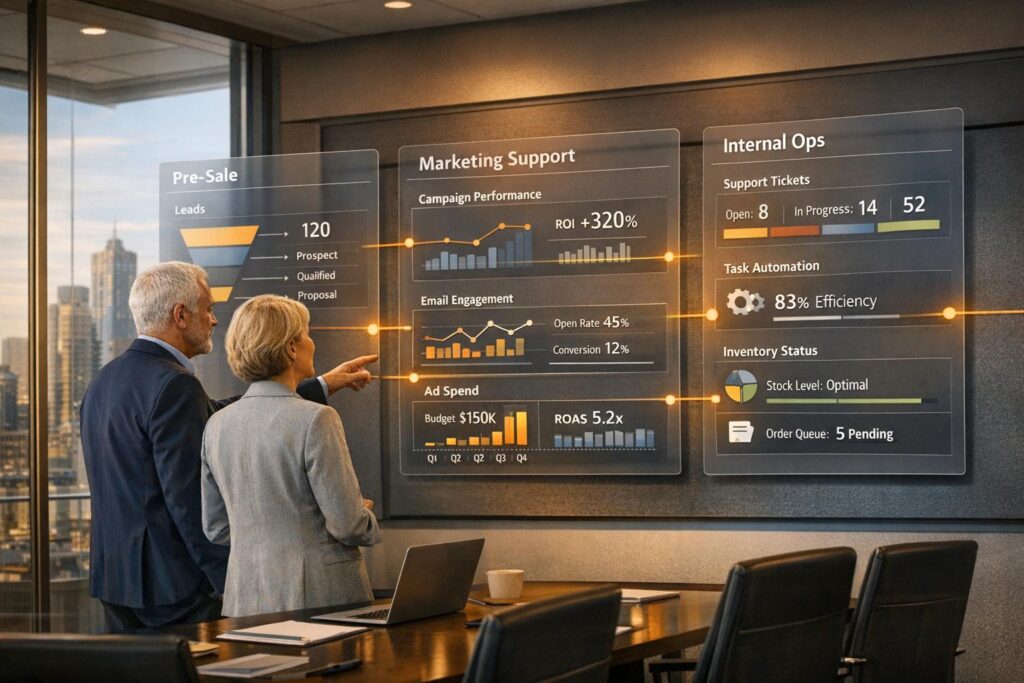
This article explores how AI agents can enhance three core areas – pre-sales, marketing support, and internal operations – drawing from the insights shared by Donna Peterson on her B2B-focused podcast. With practical strategies and actionable takeaways, this guide will help you evaluate whether AI agents align with your organization’s goals.
What Are AI Agents?
AI agents operate like digital concierges, engaging customers and stakeholders in dynamic, personalized conversations. Much like an attentive concierge navigating a guest through restaurant options or local attractions, AI agents gather relevant information, analyze preferences, and deliver tailored solutions. Their ability to simulate human-like interactions makes them invaluable in complex B2B environments where building trust and relationships is paramount.
sbb-itb-e60d259
The Three Types of AI Agents Every B2B Leader Should Know
To harness the power of AI agents effectively, it’s essential to understand their potential roles within an organization. Below, we delve into three key types of AI agents and their applications.
1. Pre-Sales AI Agents: Personalizing the Buyer Journey
The pre-sales AI agent focuses on qualifying leads and preparing sales teams with actionable insights. Without proper qualification, sales teams often overwhelm prospects with irrelevant information, slowing the decision-making process. AI agents solve this by engaging leads in meaningful, iterative conversations to gather crucial details about their goals, pain points, and priorities.
Key Features and Benefits:
- Enhanced Lead Qualification: AI agents ask targeted questions, such as company size, desired outcomes, and geographic location, to provide clarity on a prospect’s needs.
- Streamlined Sales Conversations: By equipping sales reps with specific data, AI agents enable more focused and personalized outreach.
- Increased Trust and Engagement: These agents foster a warmer, less robotic experience, mirroring human interactions to establish rapport and trust.
Real-World Application:
Imagine a prospect who visits your website after downloading a whitepaper. Instead of sending a generic follow-up, an AI agent initiates a conversation to learn more about their challenges. When a sales rep steps in, they already know the prospect is looking to improve first-contact resolution for a team managing high-value, complex interactions.
2. Marketing Support AI Agents: Delivering Value at Every Stage
B2B organizations often struggle to provide the right content to the right audience at the right time. A marketing support AI agent resolves this by assessing where prospects are in their buyer’s journey – awareness, consideration, or decision – and dynamically delivering the most relevant resources.
Key Features and Benefits:
- Content Personalization: These agents match users with educational materials, case studies, or technical documentation that align with their current needs.
- 24/7 Accessibility: Unlike human teams, AI agents are available around the clock, ensuring immediate support for prospects in different time zones.
- Language Localization: AI agents can communicate in multiple languages, making them indispensable for global organizations.
Real-World Application:
Let’s say you recently presented at an industry event and shared a QR code with attendees. A marketing support AI agent could follow up by providing detailed answers to questions about your company’s background, leadership, and specific solutions discussed during the event. This continuous engagement keeps your organization top of mind while nurturing leads through the sales funnel.
3. Internal Department AI Agents: Driving Collaboration and Alignment
For large and distributed teams, aligning efforts across sales, marketing, and support can be a monumental challenge. Internal department AI agents bridge the gap, ensuring seamless communication, knowledge sharing, and goal alignment.
Key Features and Benefits:
- Knowledge Sharing: AI agents store and disseminate best practices, successful sales responses, and campaign insights to eliminate silos.
- Goal Alignment: By centralizing information, these agents help departments work toward unified objectives, reducing inefficiencies.
- Shortened Sales Cycles: With access to shared insights, teams can close deals faster and respond to leads more effectively.
Real-World Application:
Consider a sales rep in Norway who discovers a powerful response to objections about product costs. An internal AI agent can instantly share this technique with global teams, accelerating deal timelines and improving conversion rates across regions.
Implementing AI Agents: A Step-by-Step Approach
Adopting AI agents is not a one-size-fits-all process. It requires careful planning, collaboration, and ongoing refinement to achieve meaningful results. Here’s a three-step framework to get started:
Step 1: Identify Pressure Points
Pinpoint areas within your organization where teams are stretched too thin or where inefficiencies are most pronounced. For example, are sales teams struggling to qualify leads? Is your marketing team overwhelmed trying to manage multiple campaigns?
Step 2: Define Workflows
Determine the specific workflows that an AI agent will support. For a pre-sales agent, this might include mapping out a sequence of qualifying questions and identifying the data sales reps need to tailor their outreach. For internal agents, focus on how they can facilitate knowledge sharing and align departmental goals.
Step 3: Review and Iterate
Once implemented, continuously evaluate the AI agent’s impact. Collaborate with all stakeholders – sales, marketing, and leadership – to refine its functionality and ensure alignment with organizational objectives. Remember, AI agents evolve through iteration and must be updated regularly to remain effective.
Key Takeaways
- AI Agents as Digital Concierges: Think of AI agents as conversational partners that gather insights, personalize interactions, and provide tailored solutions.
- Three Key Roles:
- Pre-Sales AI Agents: Qualify and warm up leads for sales teams, reducing overwhelm and improving engagement.
- Marketing Support AI Agents: Deliver contextually relevant content throughout the buyer’s journey and operate 24/7.
- Internal Department AI Agents: Facilitate collaboration, knowledge sharing, and goal alignment across teams.
- Practical Implementation Steps:
- Identify organizational pain points to address with AI agents.
- Define workflows and set clear objectives for each agent type.
- Regularly review and improve based on team feedback and performance metrics.
- Global Impact: AI agents can localize communications, making them essential for global organizations with diverse audiences.
- Trust and Relationships Matter: Beyond automation, AI agents should emulate human interactions to build trust and foster meaningful connections.
Final Thoughts
AI agents are not just a trend – they are quickly becoming an essential component of modern B2B organizations. By addressing key challenges in pre-sales, marketing, and internal operations, they offer an unparalleled opportunity to scale efficiently while maintaining a personalized customer experience.
However, success demands a thoughtful approach. As Donna Peterson emphasized, developing an AI agent is not a "set it and forget it" solution. It requires active collaboration, regular refinements, and an unwavering focus on delivering value to both prospects and internal teams. By taking the time to implement AI agents strategically, you can drive better outcomes, shorten sales cycles, and demonstrate ROI in measurable ways.
Source: "How Can AI Agents Help B2B Brands?" – World Innovators, YouTube, Dec 11, 2025 – https://www.youtube.com/watch?v=ZcxPsnYC8J4