If your support team is just resolving tickets, you’re already behind.
Top-performing teams don’t just respond—they anticipate, adapt, and continuously improve. Building that kind of team isn’t about more headcount or faster responses. It’s about leadership, structure, and systems that support clarity, trust, and accountability.
This guide walks you through how to build, coach, and scale a high-performing support team—from hiring and mission-setting to tools, workflows, and KPIs that actually matter.
The Hidden Costs of a Mediocre Support Team
The damage isn’t always loud.
A mediocre support team doesn’t spark crises—it causes slow leaks. Quiet churn, unresolved frustrations, and missed opportunities gradually erode customer trust.
Silos, repeated handoffs, and poorly prioritized tickets drain agent time and customer goodwill. Fast ticket closures mean little if customers feel misunderstood. Hitting SLAs is hollow if clarity, empathy, or follow-through are missing.
It’s not just about the customer. Weak systems lead to agent turnover. High turnover fuels training fatigue, service gaps, and burnout. That cycle hurts morale, consistency, and the bottom line.
Before diving into strategy, it’s important to understand what separates top-tier teams.
Set the Foundation: Purpose, Role Clarity, and Objectives
If your team doesn’t understand why they exist, no metric will fix it.
Support isn’t a catch-all department—it’s a strategic function. A high-performing team strengthens retention, fuels product feedback, and reinforces your company’s value in every interaction.
That starts with purpose. Not a generic motto like “delight customers,” but a mission tied to real outcomes: Are you reducing churn? Driving renewals? Scaling onboarding? Define the mission—and make it relevant.
Then get precise about roles. Each agent should know:
- What they’re responsible for (channels, product lines, customer segments)
- How success is measured (KPIs tied to outcomes, not activity)
- Where they’re empowered to act without escalation
Vague roles lead to hesitation. Clear roles create initiative.
Finally, focus your metrics. Don’t overwhelm the team with dashboards. Anchor around 2–3 high-impact KPIs—like CSAT, Resolution Time, or Escalation Rate—and revisit them quarterly.

Hire for Fit, Not Just Skill
Support hiring often leans too hard on scripts and speed tests—and not enough on problem-solving and adaptability. But you’re not building a call centre. You’re building a team that navigates complexity, calms frustration, and learns fast.
Technical skills matter. But in modern support environments—especially those with evolving tools and SLA expectations—what matters more is judgment, curiosity, and coachability.
Here’s a smarter hiring approach:
✔ Screen for how they think, not just what they say. Present real scenarios and ask how they’d handle them. Probe for reasoning, not rehearsed answers.
✔ Look for culture adds, not just fits. Will they bring a fresh perspective, or simply blend in?
✔ Prioritize growth mindset. Continuous learning beats rigid experience in dynamic support environments.
The right people won’t just fill roles—they’ll push your team forward.

Lead Like a Coach, Not a Boss
Support teams rarely fail from lack of talent. They fail from leadership that prioritizes control over guidance.
Too many managers treat their teams like dashboards—focused on outputs instead of people. If your one-on-ones feel like performance audits, you’re not coaching—you’re micromanaging.
✔ Coaching isn’t soft—it’s strategic. It’s about asking better questions, helping agents build judgment, and turning feedback into growth. Great support leaders don’t just give answers. They build thinking partners.
✔ Make development continuous. Training shouldn’t end at onboarding. Use your analytics to spot coaching moments in real time. If resolution time spikes, don’t just flag it—review the chats, listen to calls, and fix the root cause, not just the symptom.
✔ Set clear standards—then step back. Define what “great” looks like in tone, timing, and accuracy. Then trust your team to reach it their way. High-performing teams thrive in structured but flexible environments where support feels human, not surveilled.
Define What “Good” Looks Like, Then Measure It Relentlessly
You can’t scale what you haven’t clearly defined. Yet many support teams still chase vague goals like “keep customers happy” or “be responsive.”
That’s not a strategy—it’s ambiguity. High-performing teams operate with clarity. They know what great service looks like, how it’s measured, and why it matters.
Start by locking in the right performance metrics: CSAT, First Response Time, Resolution Time, Reopen Rate, and Escalation Frequency. Don’t lump all channels together—what’s acceptable in live chat isn’t the same for email or voice. Segment your data to get real insight.
And don’t stop at observation. Use these numbers to coach, not control. Metrics should fuel growth—not fear.
Modern tools make this easier. Implementing SLA management automation lets you track deadlines, escalate intelligently, and reduce the manual friction that often derails teams. When response targets are visible and real-time, performance improves naturally.
Data gives you leverage—but only if it’s accurate, contextual, and actionable.

Design a Culture That Outlasts the Tech Stack
Tools evolve. Culture endures.
You can implement the most advanced platform—from ticketing systems and SLA dashboards to AI-powered summaries—but if your team feels burned out or unclear on purpose, no tool will fix it.
High-performing support teams are built on shared values and trust. That means:
✔ Psychological safety comes first. If agents are afraid to speak up, your performance ceiling is already set—and it’s low.
✔ Empower frontline decisions. The best resolutions often happen at the edge, not through approval chains.
✔ Recognize wins in real time. Don’t wait for quarterly reviews. Catch and call out what’s working while it’s happening.
Culture isn’t abstract—it shows up in small moments: how feedback is handled, how failure is treated, and how people are made to feel.
Resilient teams don’t just react well under pressure. They grow through it.
Integrate the Tools That Actually Make This Work
A high-performing support team isn’t just built on talent—it’s built on systems that reduce friction and amplify clarity.
✔ Start with a strong ticketing backbone. Your ticketing system shouldn’t be a dumping ground. It should act as the nerve centre of your operation—making it easy to tag, prioritize, escalate, and resolve without jumping between tools.
✔ Use workflow automation with intention. Automation isn’t about replacing judgment—it’s about removing bottlenecks. Set up triggers for escalations, smart routing, and dynamic notifications that reflect real-world urgency.
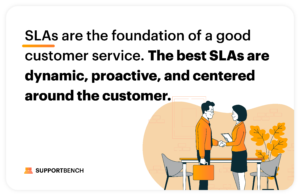
✔ Make SLAs visible and actionable. Your SLA policy shouldn’t live in a forgotten document. Use automation to monitor targets in real time, flag delays, and help agents stay ahead of breaches without added stress.
✔ Build a knowledge base that stays alive. Static help centres go stale fast. Use AI-assisted tools to keep your documentation fresh, relevant, and easily surfaced—for both customers and agents.
Support infrastructure should do more than track activity—it should drive performance.
Establish Shared Purpose and Mission Alignment
Most support teams don’t lack effort—they lack direction.
High-performing teams don’t just work hard. They work toward something specific. If your agents can’t explain how their work impacts renewal, retention, or revenue, you’re managing tasks, not outcomes.
Start by defining a clear, genuine purpose. Skip the corporate jargon. Focus on what the team really contributes—like reducing churn by building trust through clarity. Then tie that purpose to measurable outcomes like CSAT or Resolution Time.
Make it real:
- Introduce it during onboarding.
- Reinforce it in stand-ups.
- Revisit it in coaching.
Purpose alignment isn’t a one-time exercise. It’s an ongoing message that keeps people connected to the impact of their work.

Build for Sustainability, Not Just Scale
High performance doesn’t mean always-on. If your team is sprinting through a marathon, burnout isn’t a risk—it’s inevitable.
Complex tickets drain more than time—they drain people. Emotional labour, ambiguity, and pressure build quickly. Sustainable support leadership means managing the queue and the mental load.
Protect boundaries:
- Set clear escalation protocols.
- Define after-hours expectations—and stick to them.
- Don’t let urgent become your default.
Use smart tools to ease pressure, not just speed things up. AI-powered summaries and dynamic routing aren’t just for productivity—they’re relief valves that give agents space to reset and stay sharp.
The goal isn’t nonstop output. It’s long-term clarity, balance, and endurance.
Conclusion
High-performing support teams aren’t a fluke—they’re built with purpose, leadership, and the right systems behind them.
This isn’t about adding headcount or chasing the latest tool. It’s about building a team that adapts under pressure, moves with clarity, and scales without losing focus.
Supportbench helps you make that vision real. From coaching-ready analytics and SLA automation to support channel integration, it’s not just another ticketing platform—it’s the infrastructure behind sustainable performance.