Optimize Your Team with a Customer Support KPI Calculator
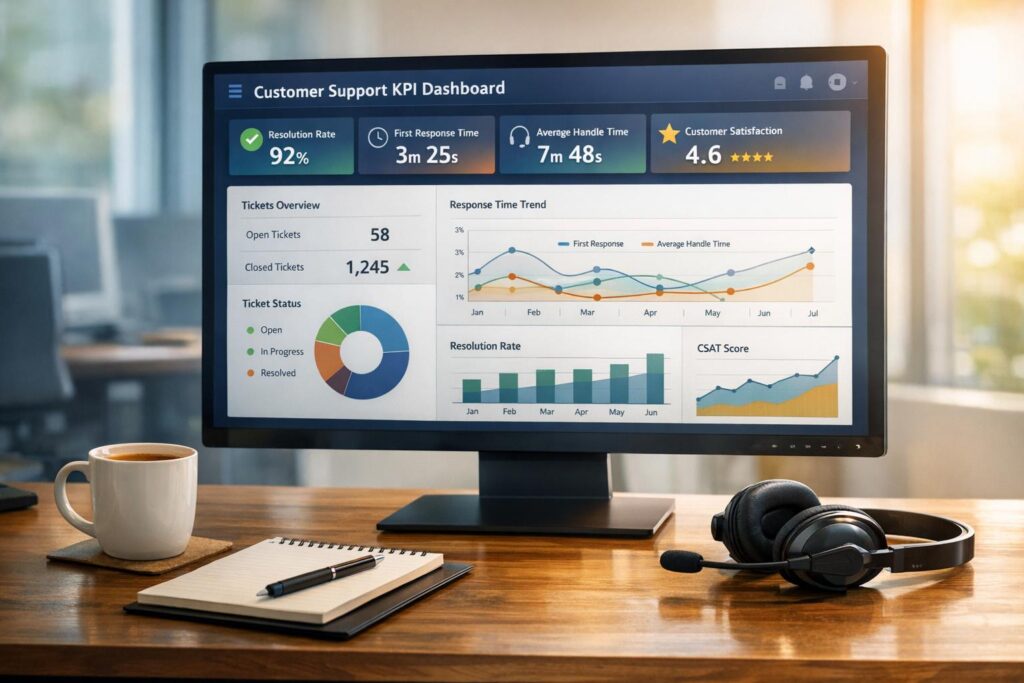
Running a customer support team without tracking performance is like driving without a dashboard—you’re just guessing where you’re headed. That’s where a tool to measure support team metrics comes in handy. It’s a straightforward way to analyze how well your team handles tickets and keeps customers happy.
Why Tracking Support Metrics Matters
Every business wants to deliver top-notch service, but without data, it’s hard to know what’s working. By using a tool to evaluate key performance indicators, you can see the full picture. Metrics like ticket resolution rates and customer satisfaction scores reveal strengths and highlight areas for growth. Maybe your team resolves tickets quickly but struggles with first-contact resolution. Or perhaps response times are lagging during busy periods. Having these insights lets you make smart tweaks to training, staffing, or workflows.
Beyond Numbers: Real Impact
The beauty of tracking performance is the real-world impact. When you improve resolution times, customers notice and trust builds. When satisfaction scores climb, loyalty follows. A solid system for monitoring support KPIs isn’t just about crunching numbers—it’s about creating better experiences for everyone involved. So, dive into your data today and start building a stronger support operation.
FAQs
What metrics does this KPI Calculator track?
Our tool calculates several key performance indicators for your support team. You’ll get the ticket resolution rate, which shows the percentage of tickets resolved out of the total received. It also estimates average response time if you provide it, or assumes a fraction of resolution time. Plus, there’s an overall performance score that combines resolution rate and customer satisfaction for a quick snapshot of how you’re doing.
What if I enter zero tickets or invalid data?
No worries—we’ve got you covered. If you input zero tickets or something that doesn’t make sense, like a negative number, the tool will display a friendly error message. It’ll guide you to correct the input so you can get accurate results. We’ve designed it to handle edge cases smoothly, so you’re never stuck scratching your head.
How can these metrics help my support team improve?
These metrics are like a roadmap for your team’s success. For instance, a low resolution rate might mean you need faster processes or more staff during peak times. If customer satisfaction scores dip, it could signal a need for better training or communication. By keeping an eye on these numbers regularly, you can pinpoint weak spots, set realistic goals, and track progress over time. It’s all about making data-driven decisions!